Category: Enterprise Architecture
-

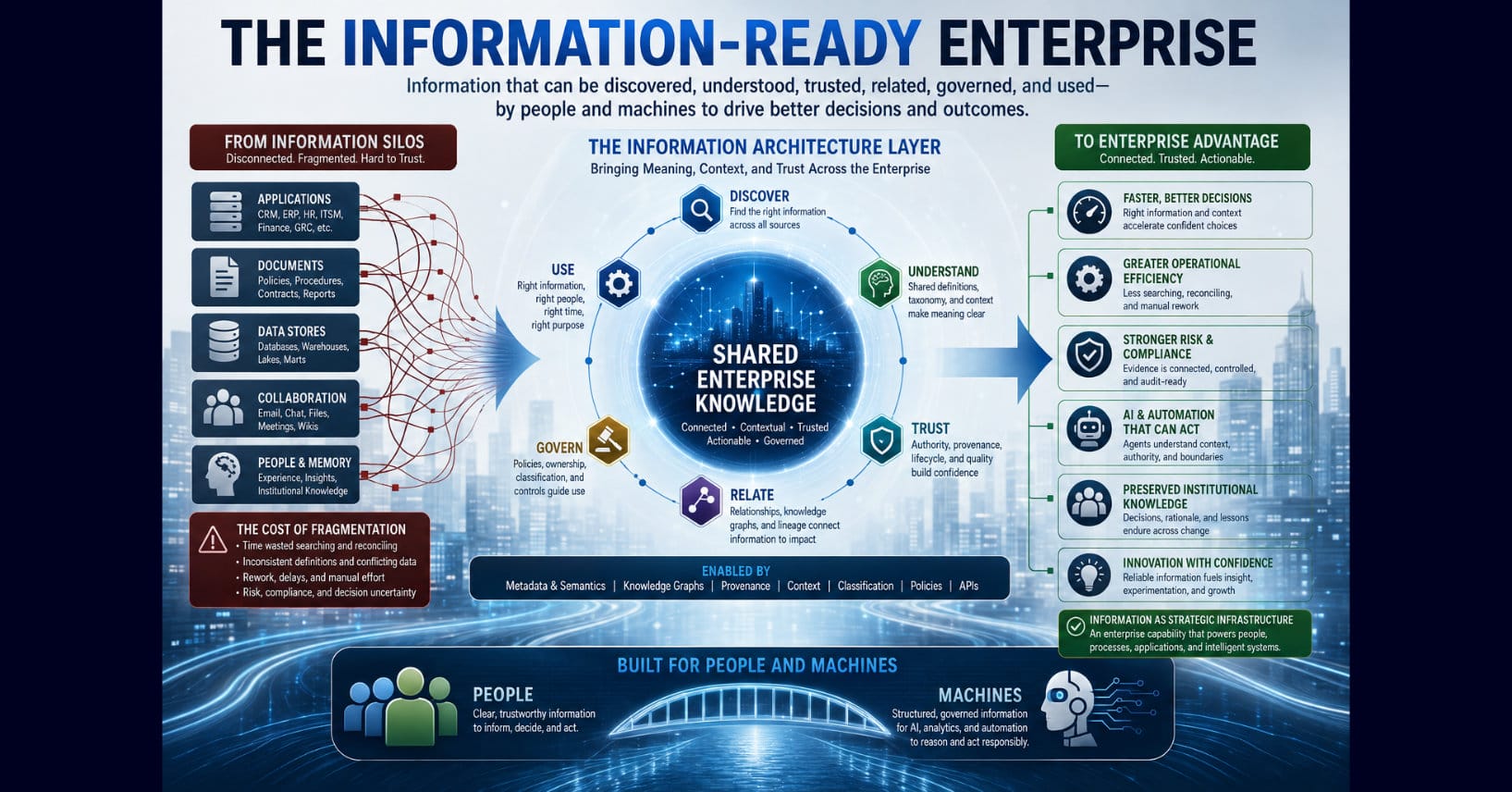
The Information-Ready Enterprise
The Information-Ready Enterprise makes critical information discoverable, understandable, trustworthy, related, governed, and usable by both people and machines.
-
Artificial Intelligence, Enterprise Architecture, Enterprise Technology, Information Architecture, Knowledge Management
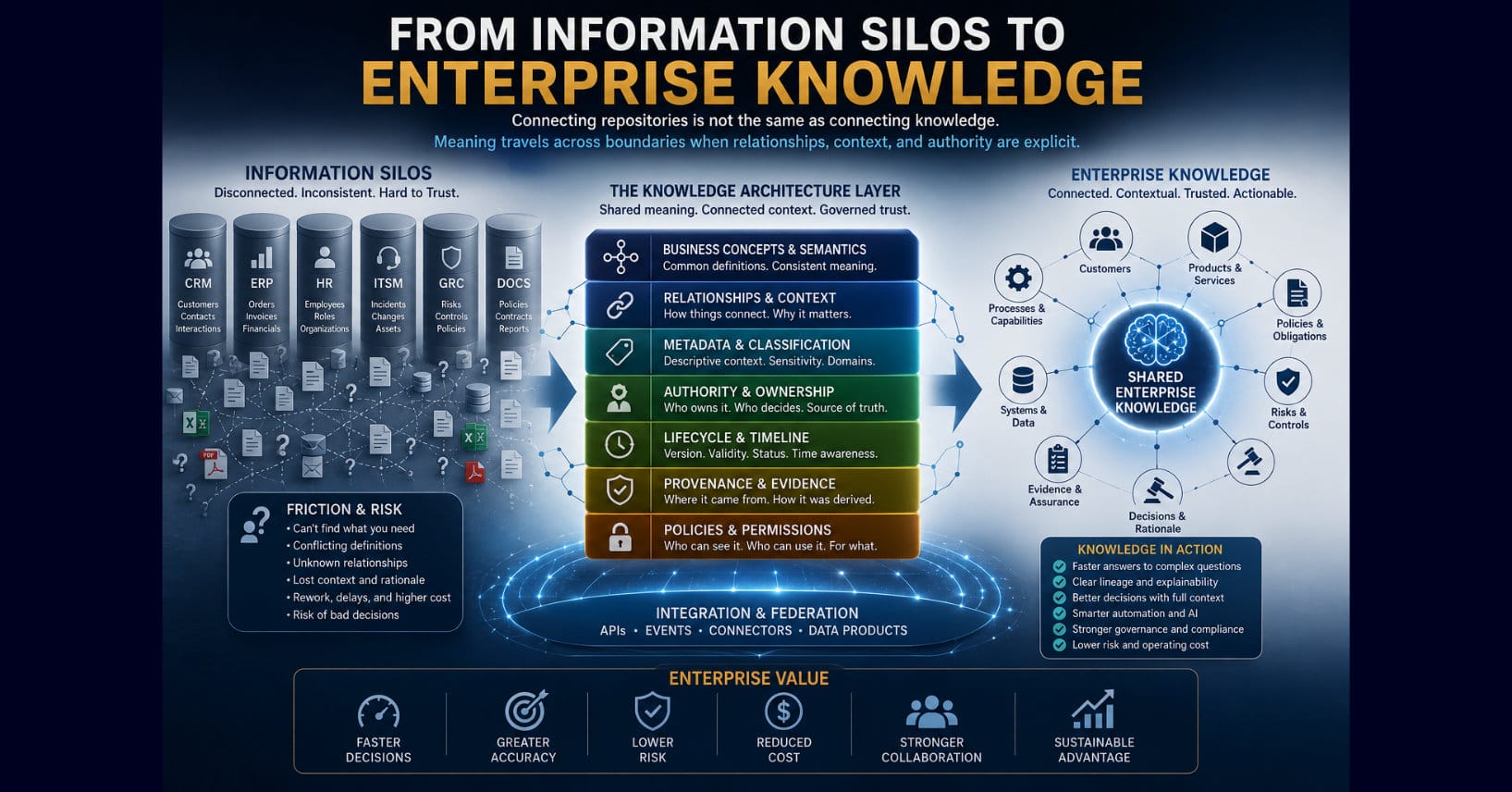
From Information Silos to Enterprise Knowledge
Connecting repositories is not the same as connecting knowledge. Enterprise knowledge emerges when meaning, relationships, authority, provenance, and context can cross system boundaries.
-
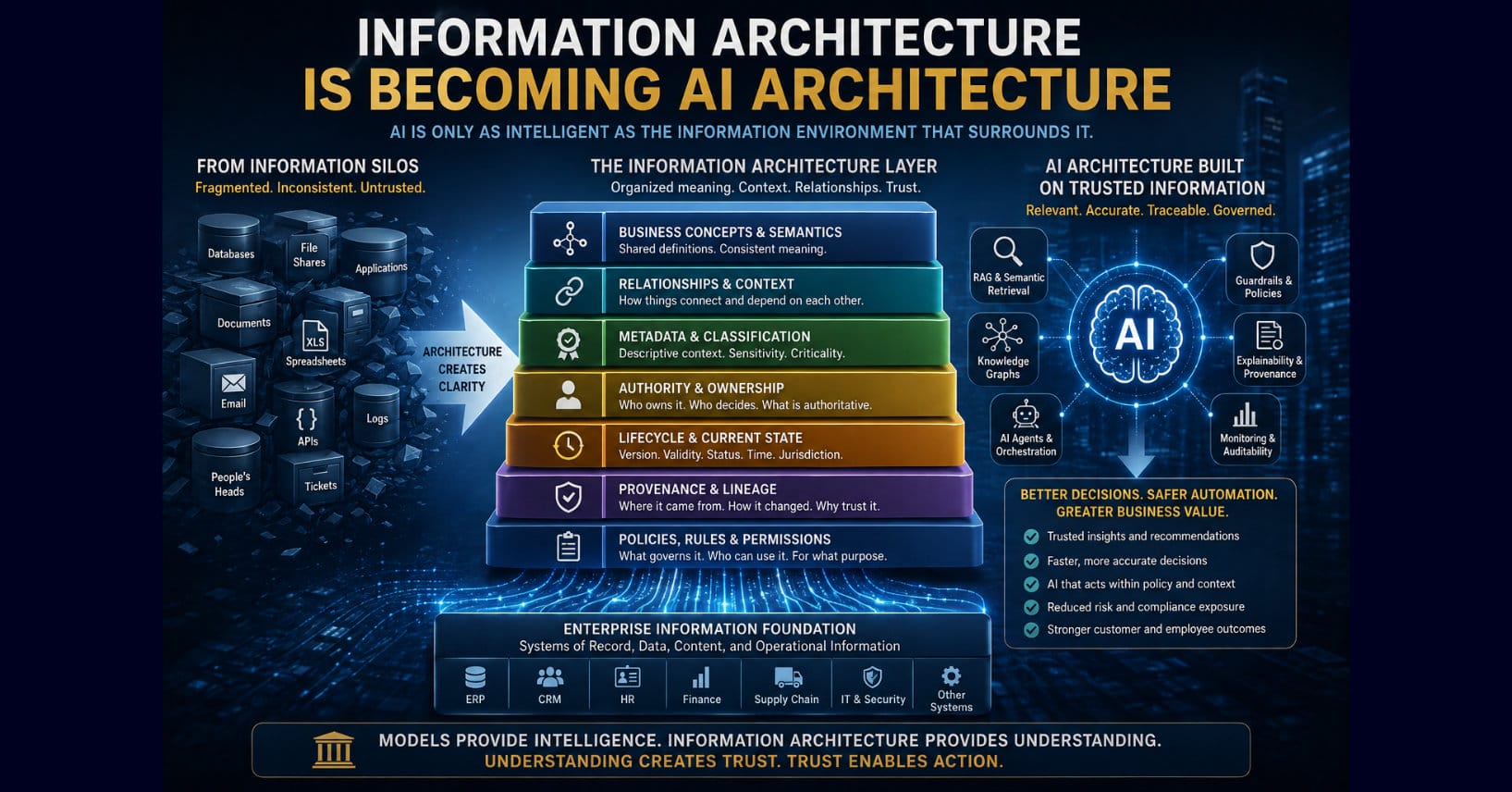
Information Architecture Is Becoming AI Architecture
Enterprise AI is only as intelligent as the information environment surrounding it. Context, authority, provenance, relationships, metadata, and permissions are becoming foundational AI architecture.
-
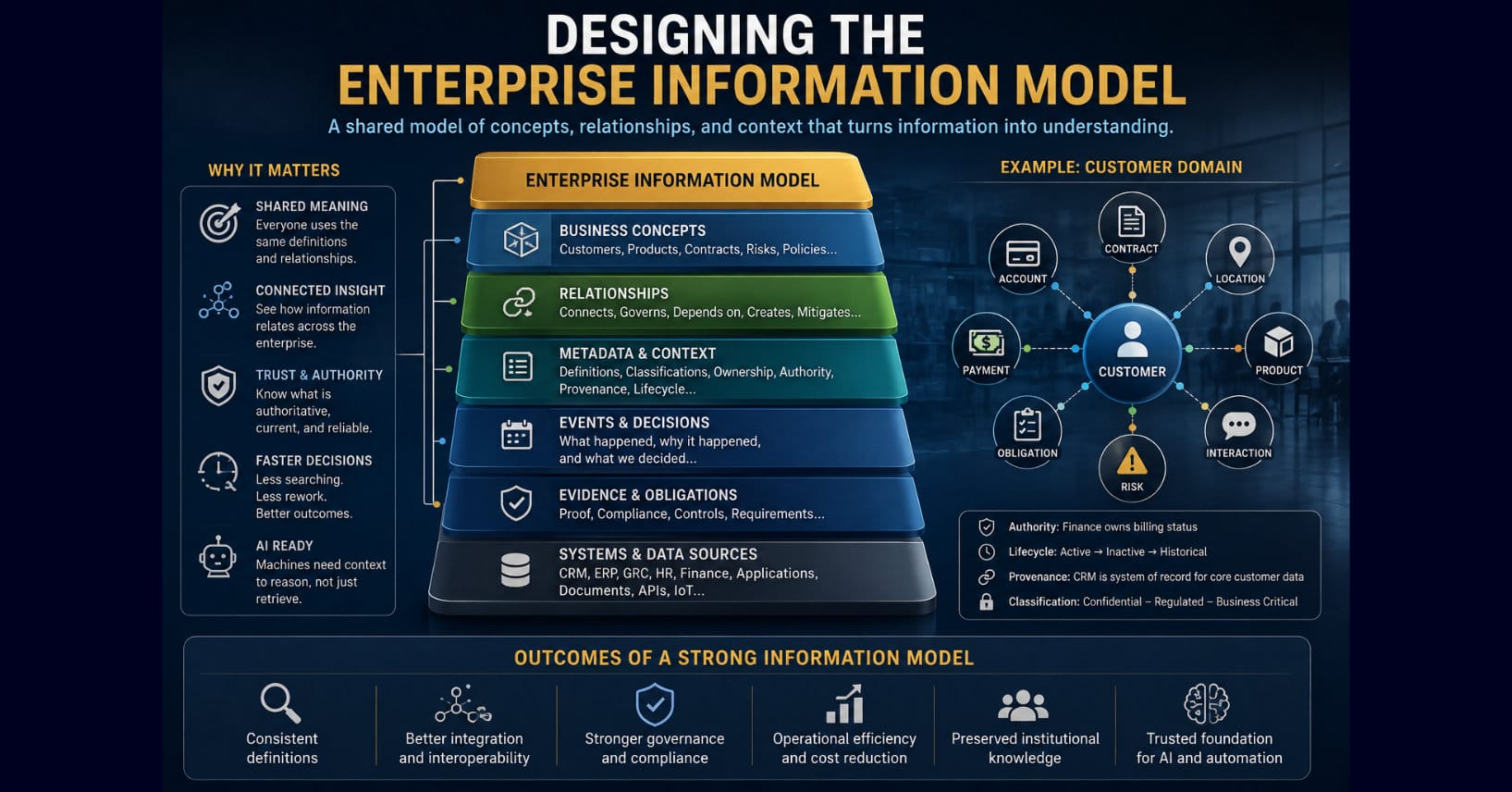
Designing the Enterprise Information Model
An enterprise information model connects business concepts, relationships, metadata, authority, provenance, decisions, and evidence into a shared architecture of meaning.
-
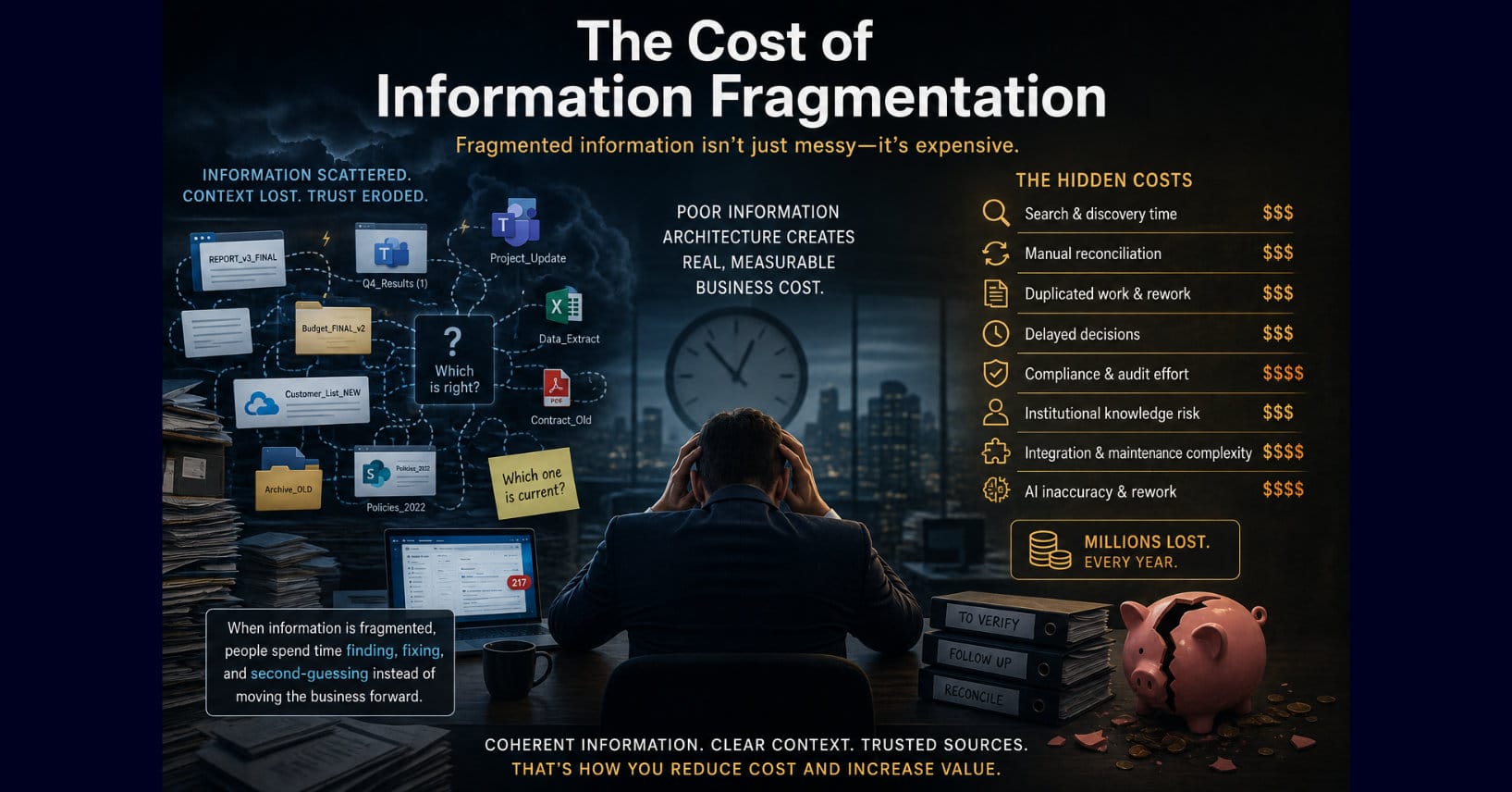
The Cost of Information Fragmentation
Information fragmentation is more than an inconvenience. It creates a persistent enterprise tax through search, reconciliation, duplicated work, slower decisions, compliance effort, integration complexity, and unreliable AI.
-
Why Information Architecture Is Not Data Architecture
Data architecture structures, stores, integrates, and moves enterprise data. Information architecture addresses something different: the meaning, context, relationships, authority, and trust surrounding that data.