Category: Field Notes
-

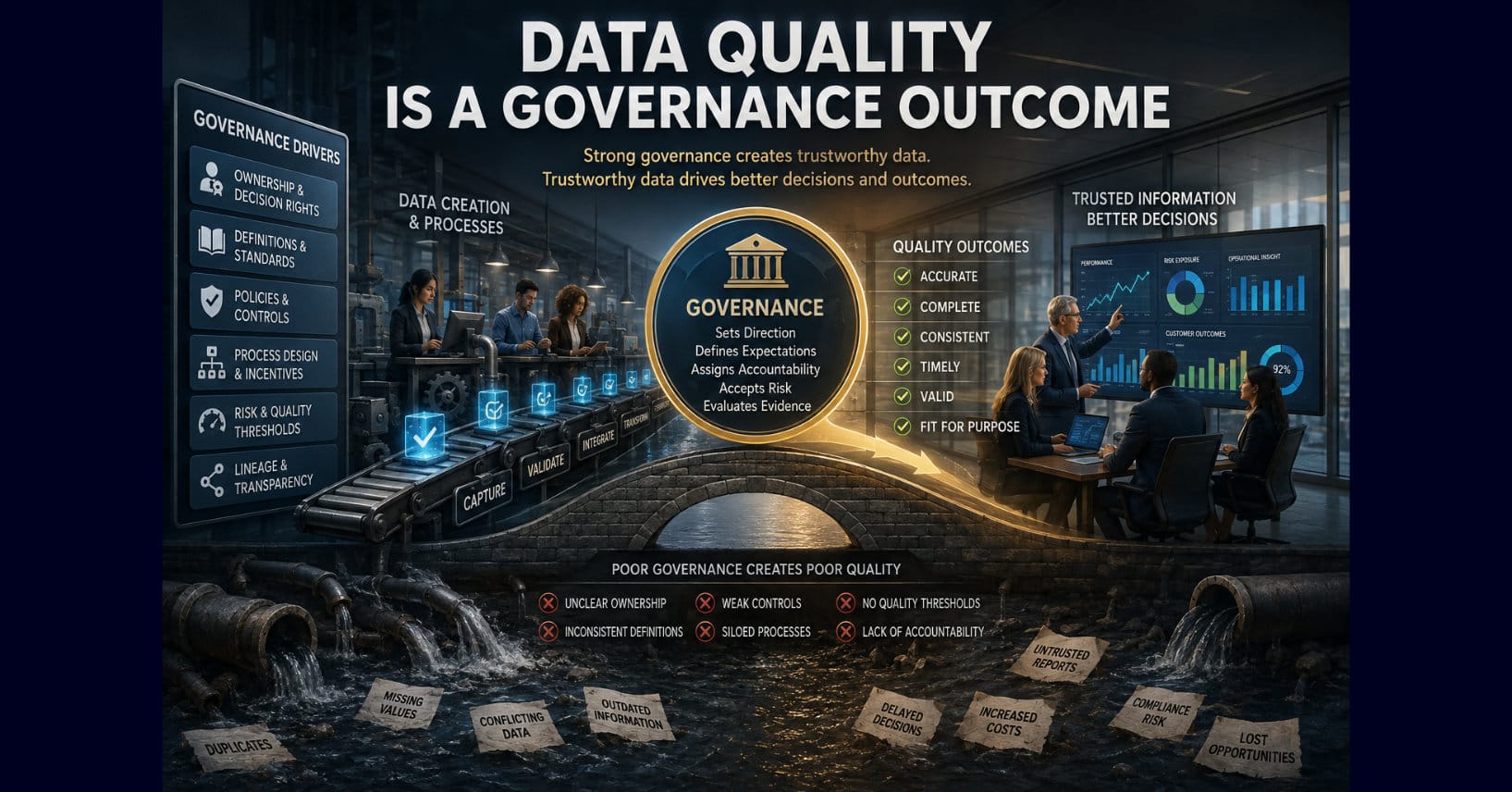
Data Quality Is a Governance Outcome
Persistent data-quality problems often begin upstream. Strong governance connects ownership, definitions, controls, processes, thresholds, and accountability to produce trustworthy data.
-
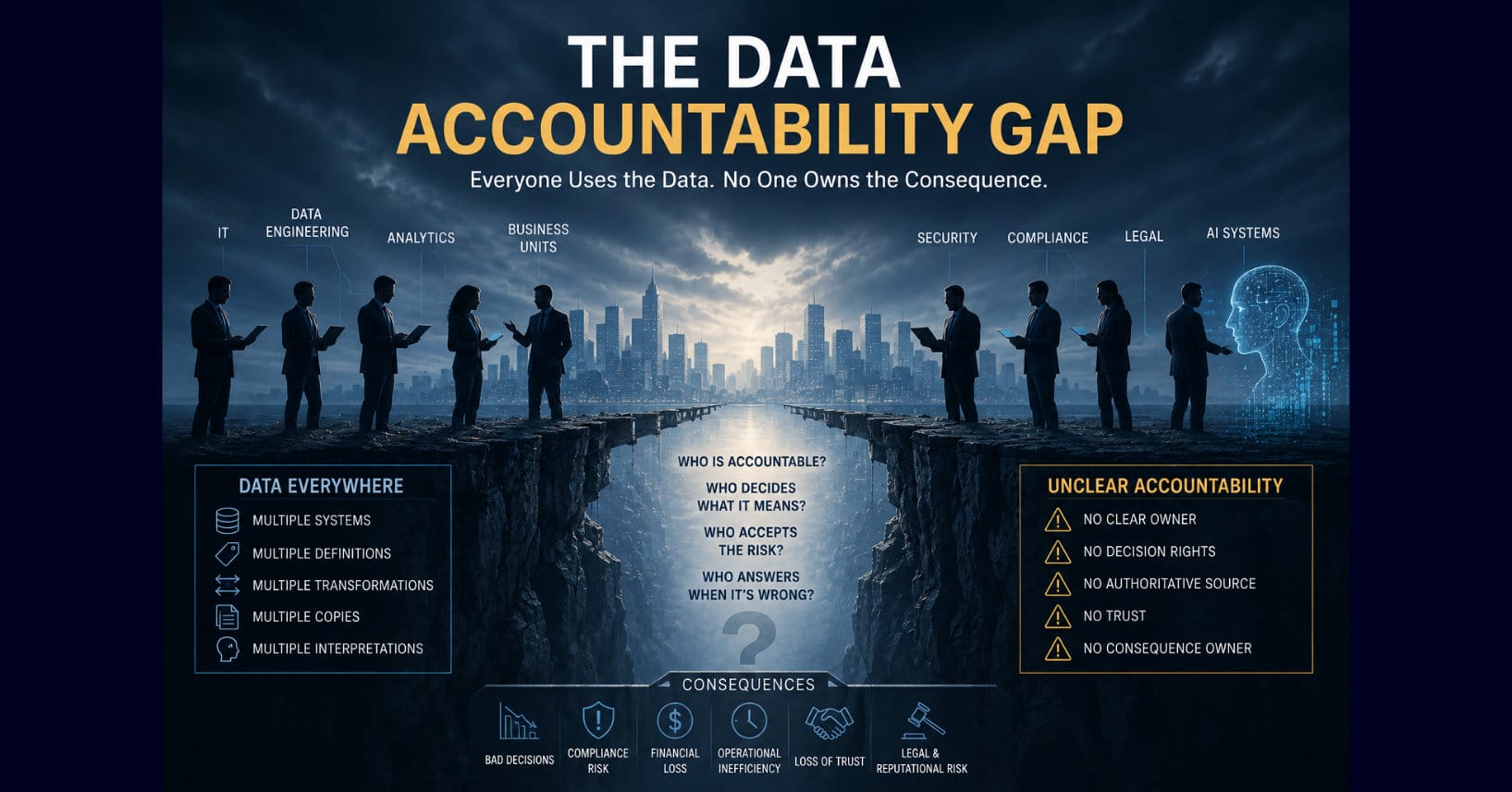
The Data Accountability Gap
Enterprise data responsibilities are widely distributed, but accountability often is not. The Data Accountability Gap emerges when everyone uses the data yet no one clearly owns its meaning, risk, decisions, and consequences.
-
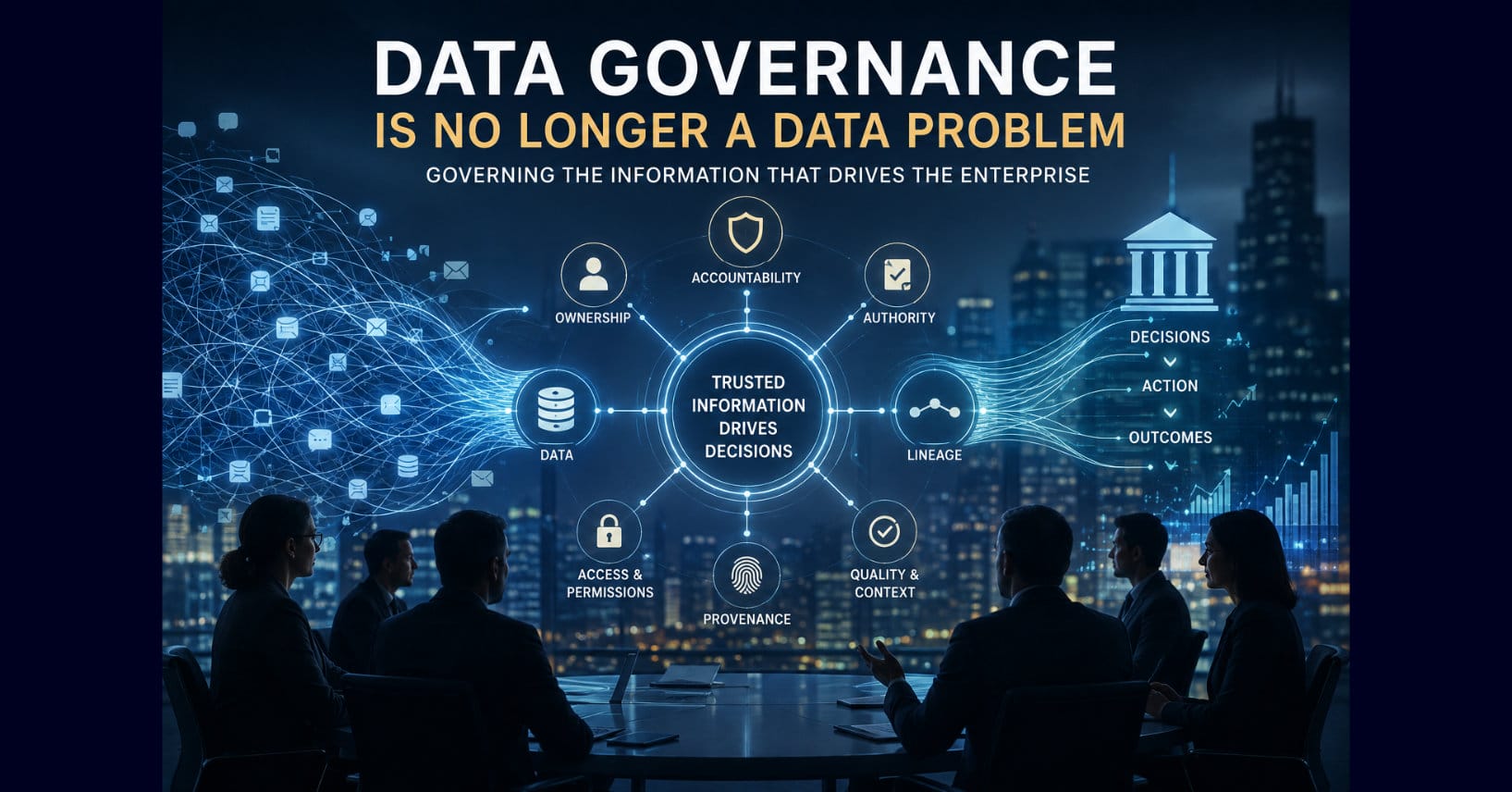
Data Governance Is No Longer a Data Problem
Data governance has moved beyond databases, quality rules, and catalogs. As data increasingly drives AI and consequential business decisions, governance must establish accountability, authority, provenance, trust, and evidence across the enterprise.
-
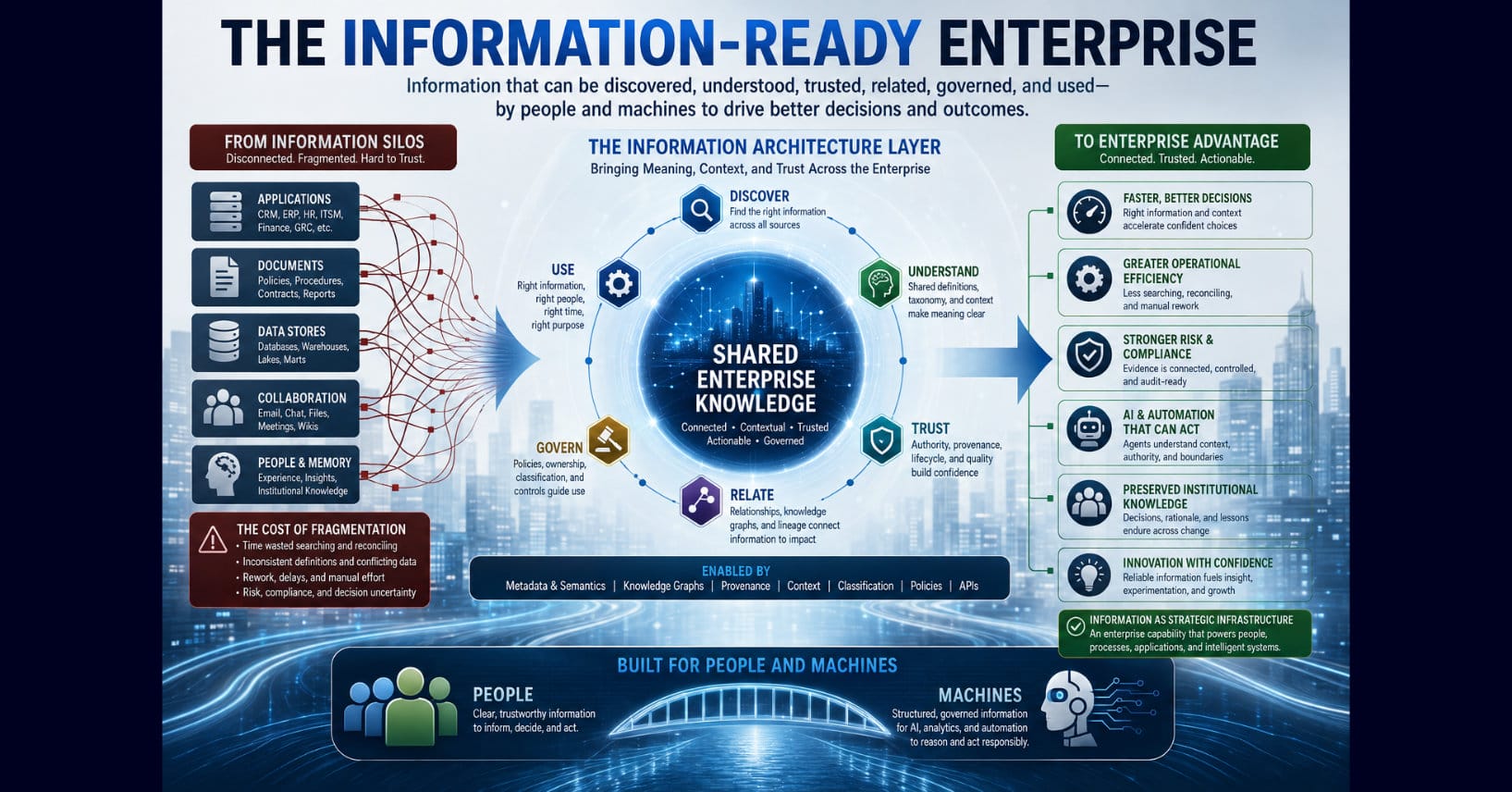
The Information-Ready Enterprise
The Information-Ready Enterprise makes critical information discoverable, understandable, trustworthy, related, governed, and usable by both people and machines.
-
I Stopped Guessing Why People Connect With Me on LinkedIn. I Asked Them.
Instead of guessing why someone connects with me on LinkedIn, I ask. The answers reveal context, intent, and opportunities no algorithm can reliably infer.
-
Your LinkedIn Outreach Isn’t Personal Just Because You Put My Name in It
LinkedIn outreach is not personal simply because it uses a name, title, or professional interest. Real relationships require context, memory, and respect for what happened in the last conversation.