Category: Field Notes
-

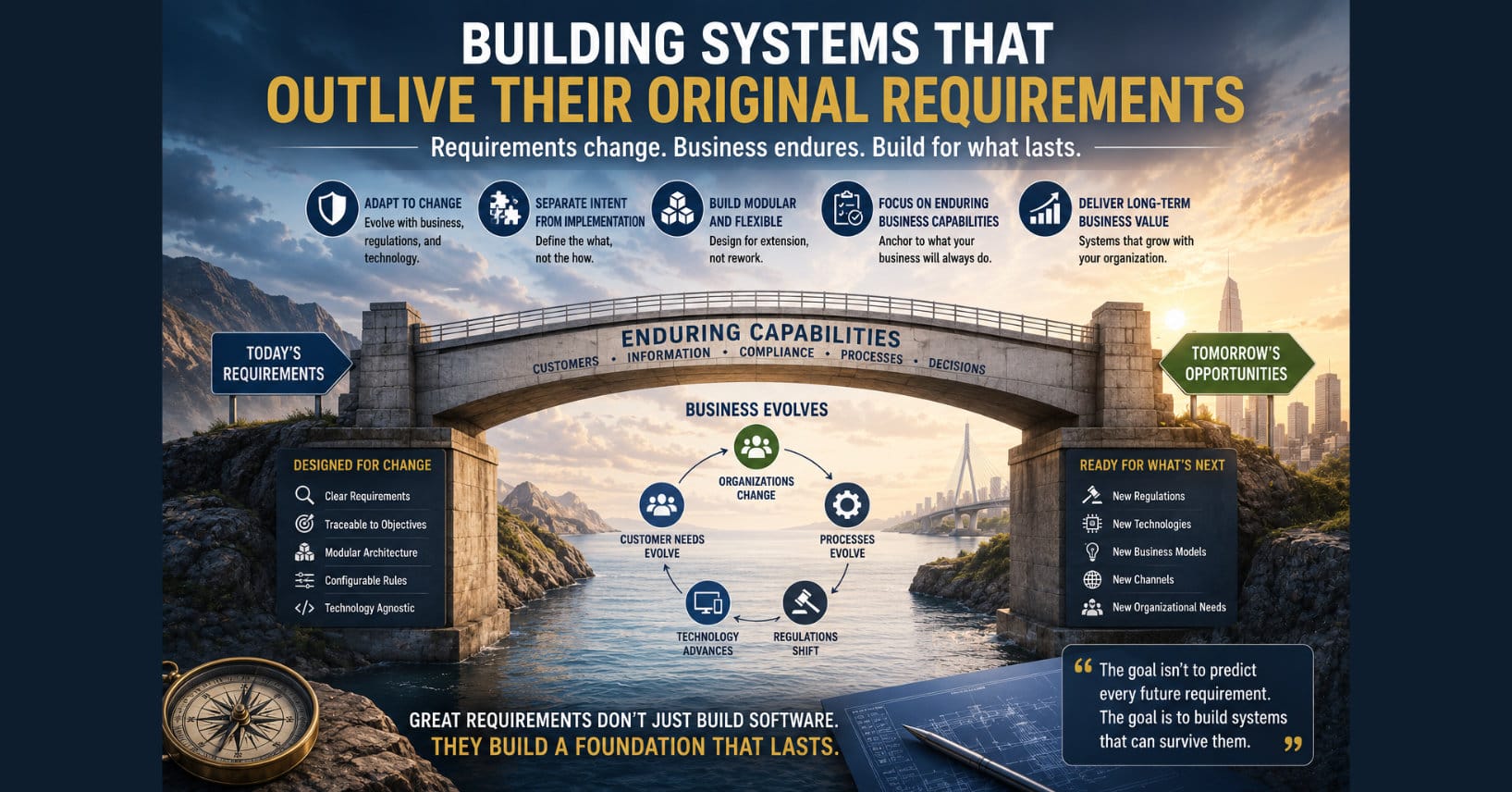
Building Systems That Outlive Their Original Requirements
Requirements change because businesses change. Strong requirements help organizations build systems that adapt without losing long-term business value.
-
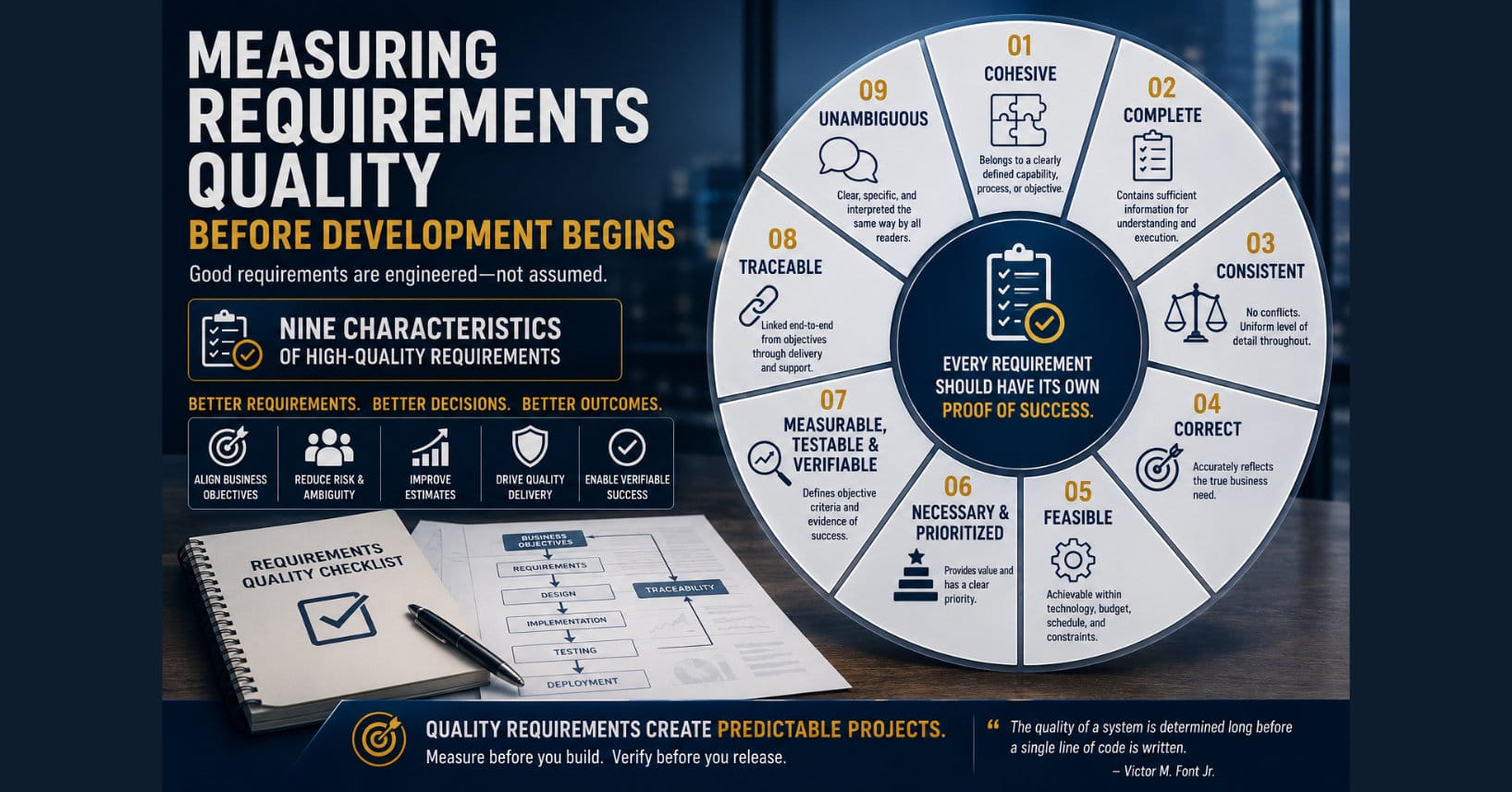
Measuring Requirements Quality Before Development Begins
Good requirements are engineered before development begins. Requirements quality depends on clarity, completeness, feasibility, traceability, and verification.
-
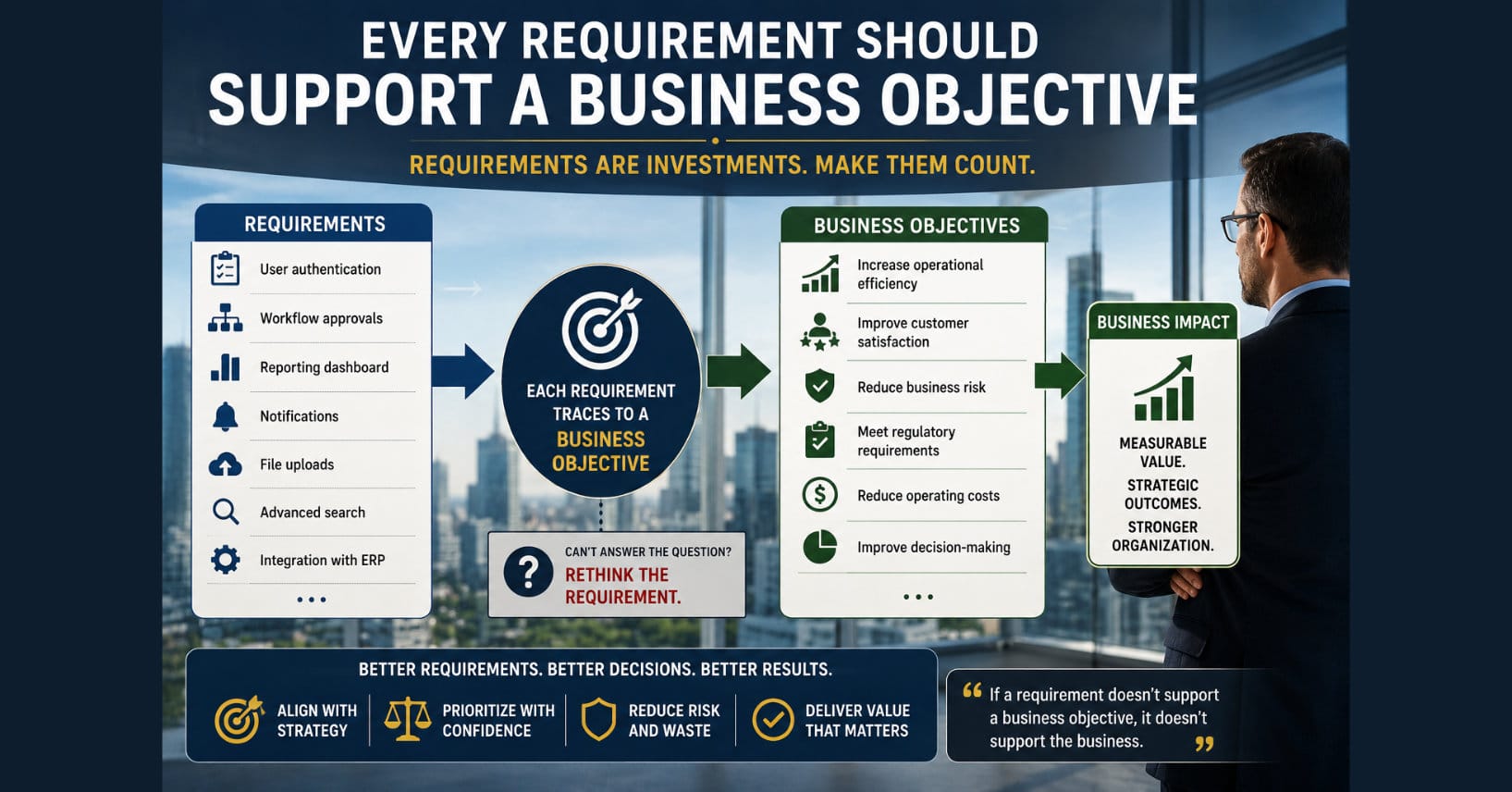
Why Every Requirement Should Support a Business Objective
Every requirement consumes time, money, and organizational attention. If it cannot be traced to a business objective, it should be questioned.
-
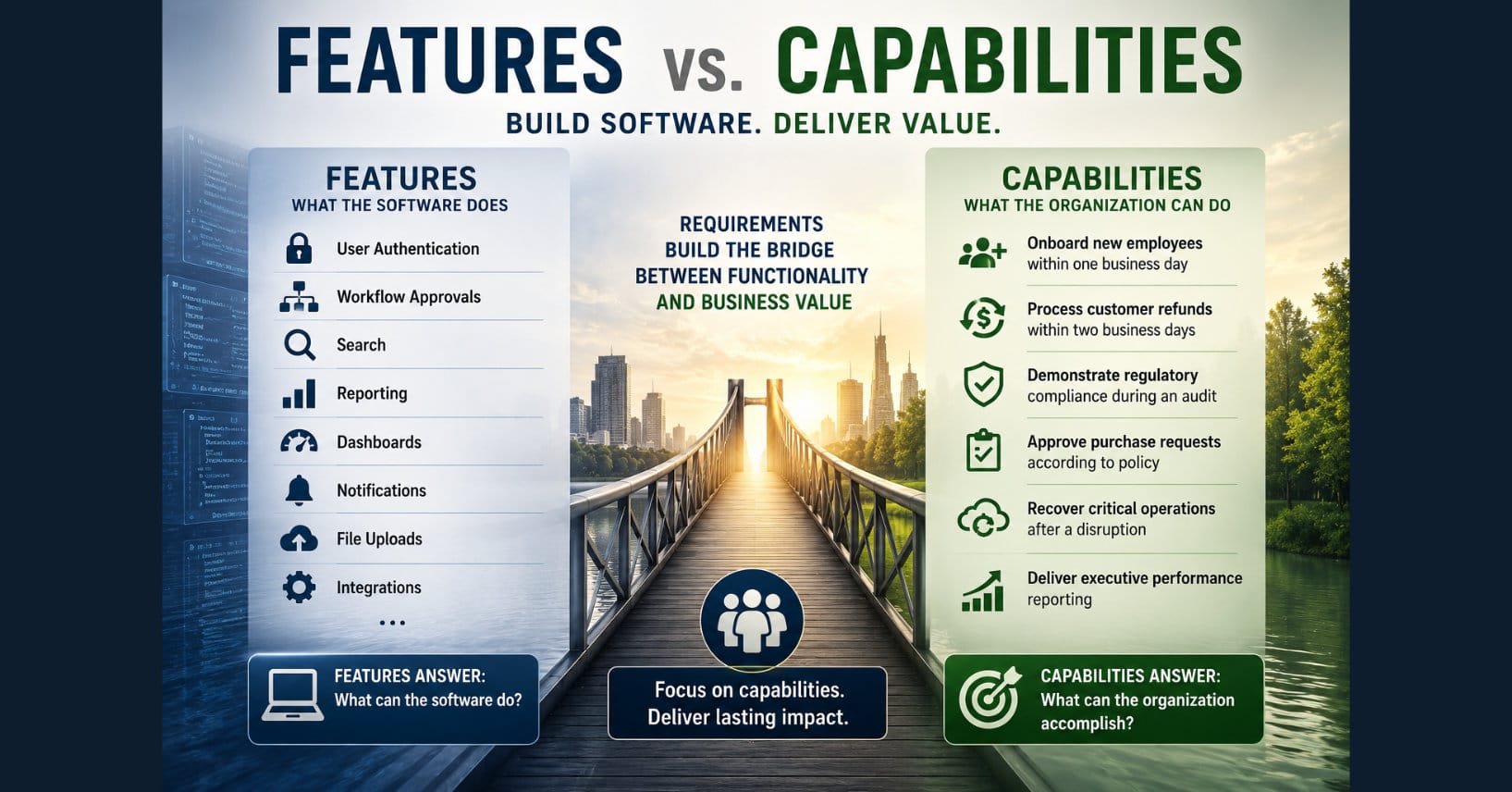
The Difference Between Features and Capabilities
Features describe what software does. Capabilities describe what the organization can accomplish because the software exists.
-
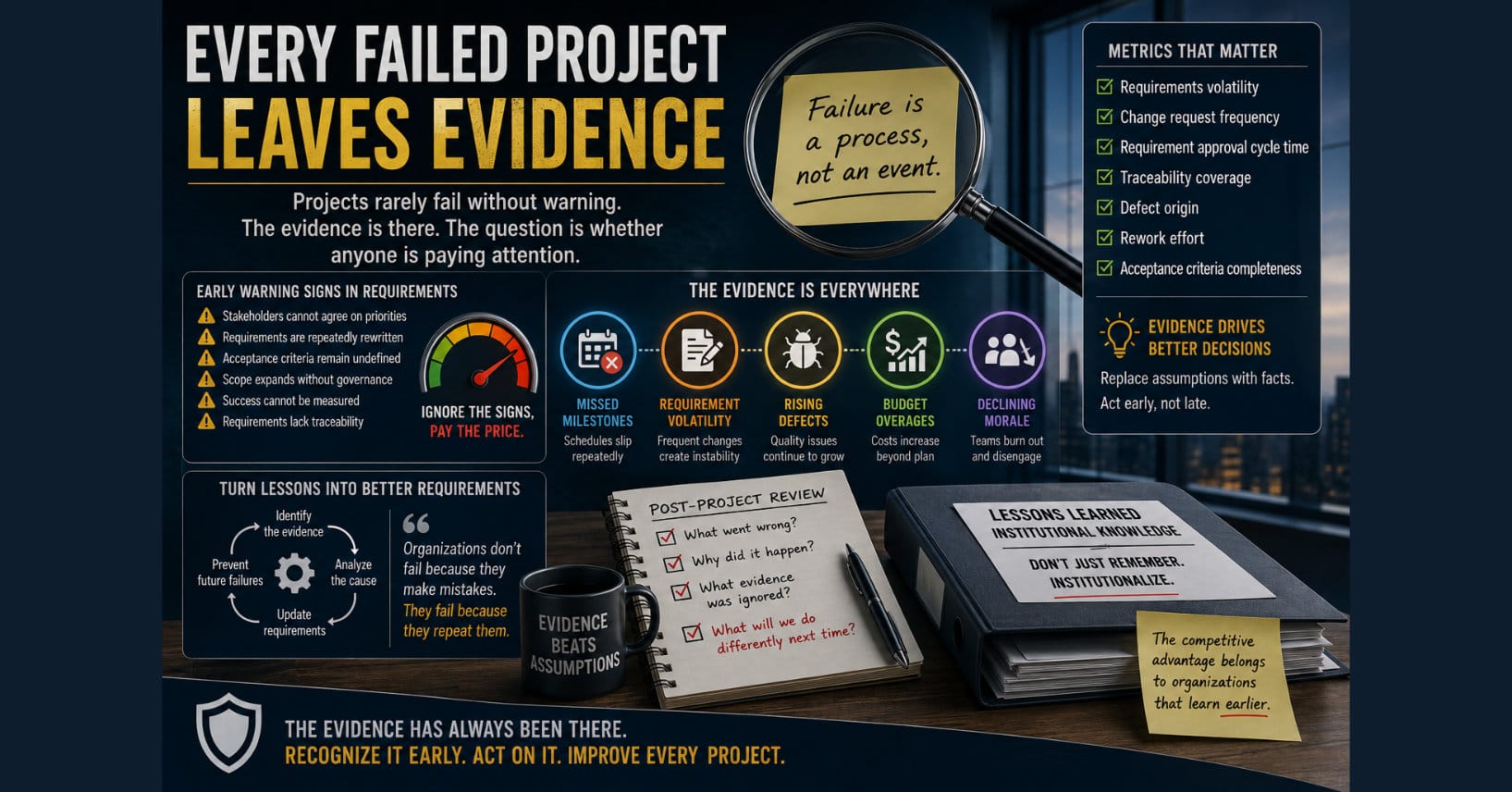
Every Failed Project Leaves Evidence
Software projects rarely fail without warning. The evidence is there long before budgets are exceeded, deadlines are missed, and stakeholders lose confidence.
-
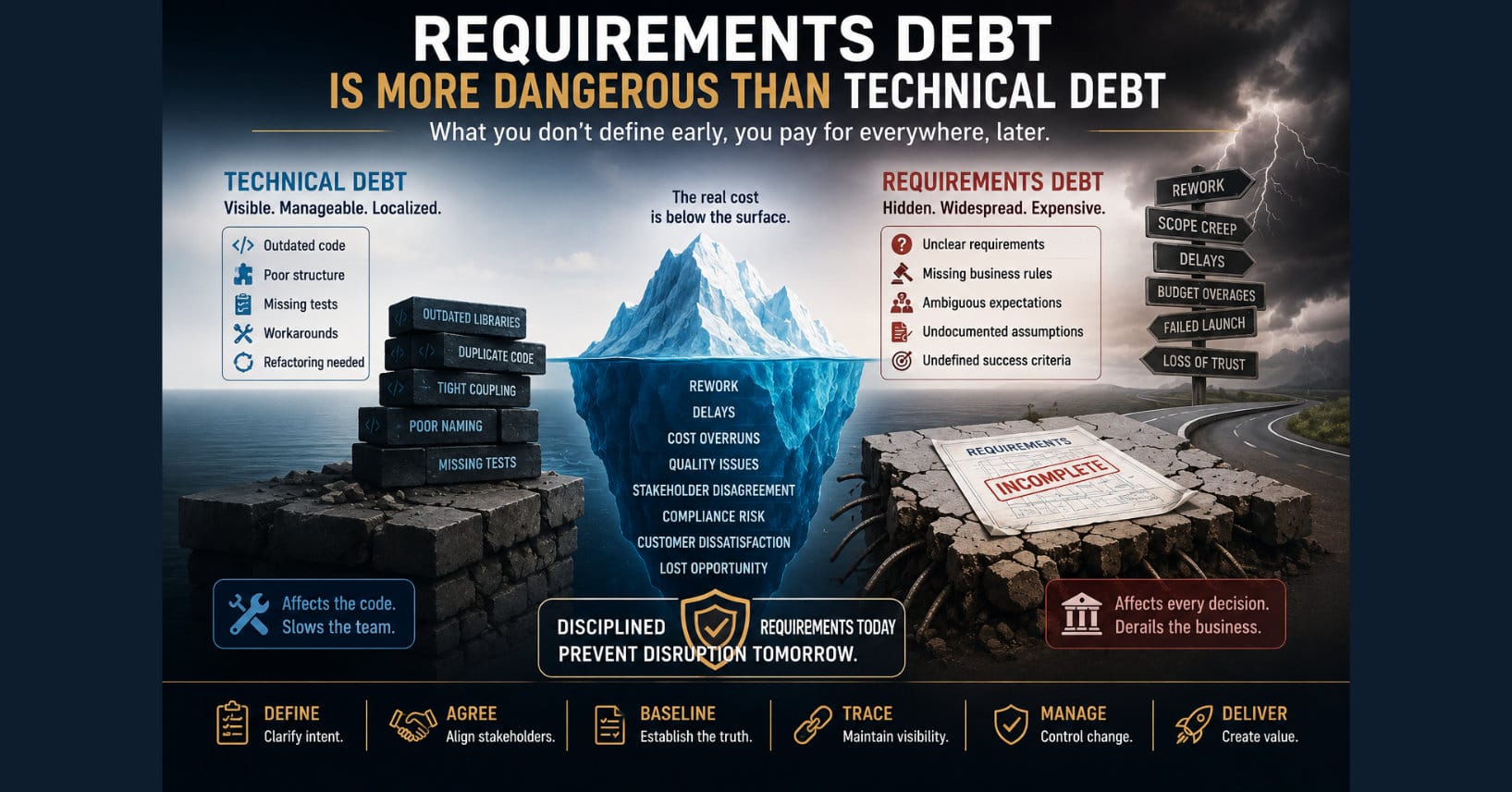
Requirements Debt Is More Dangerous Than Technical Debt
Requirements debt begins before development and spreads across architecture, testing, governance, operations, and business outcomes.