Category: Information Architecture
-
 Artificial Intelligence, Cybersecurity, Data Governance, Enterprise Architecture, Enterprise Governance, Information Architecture
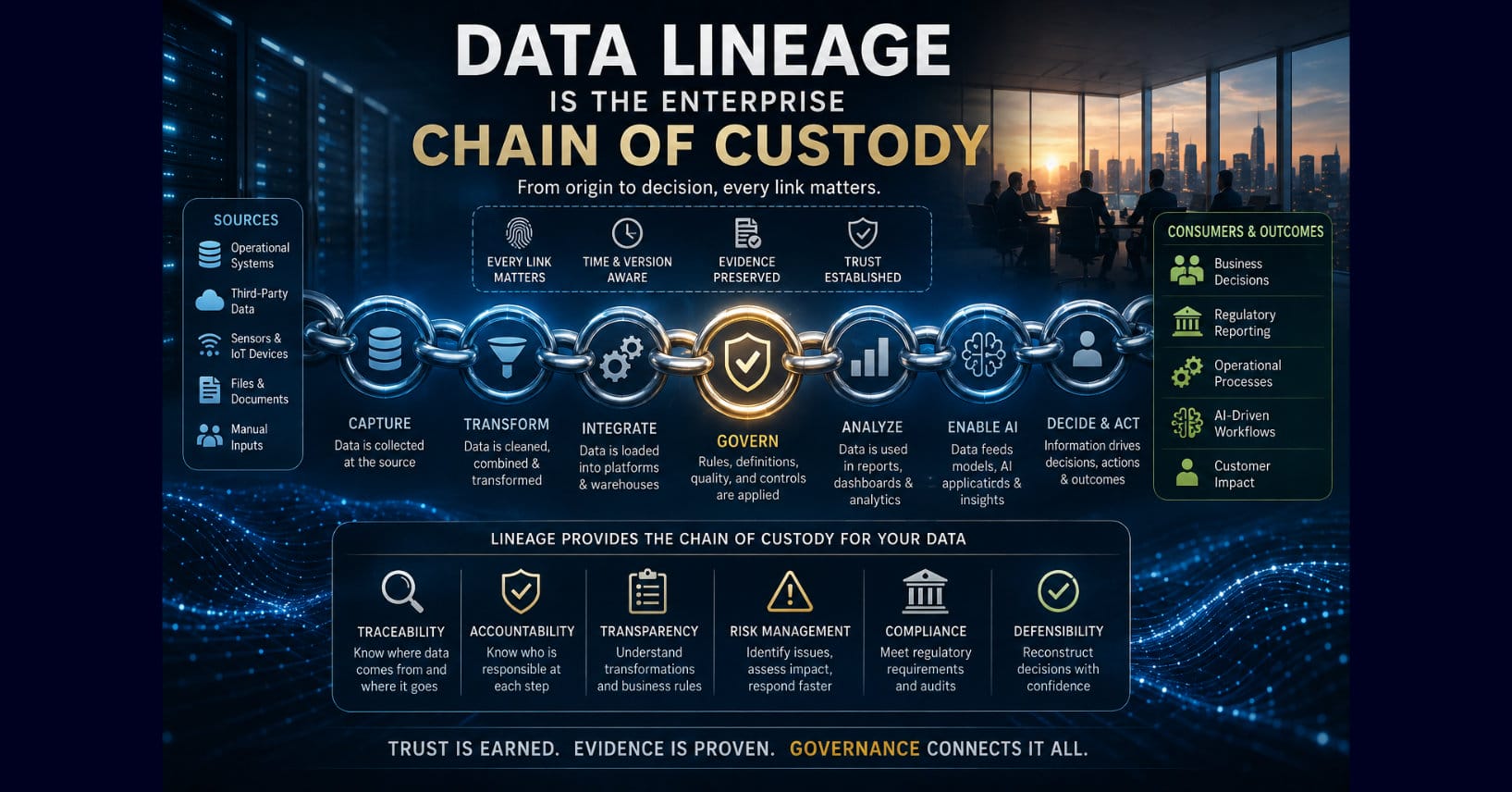
Data Lineage Is the Enterprise Chain of Custody
Data lineage is becoming the enterprise chain of custody, showing where consequential information originated, how it changed, what systems used it, and which decisions ultimately depended upon it.
-
Artificial Intelligence, Data Governance, Enterprise Architecture, Enterprise Governance, Enterprise WordPress, Information Architecture
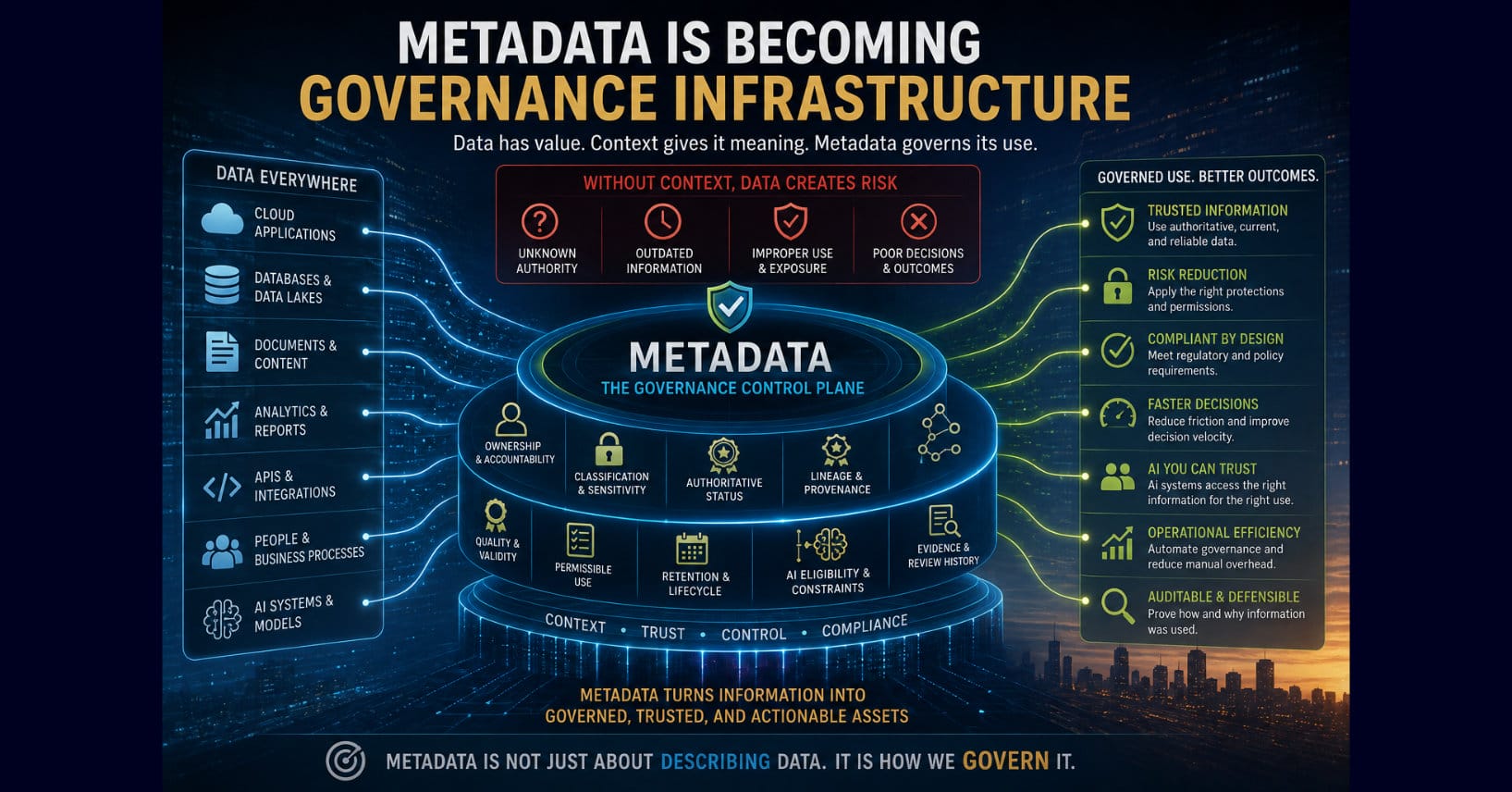
Metadata Is Becoming Governance Infrastructure
Metadata is evolving from documentation into governance infrastructure, giving people and AI the context needed to determine authority, trust, permissions, provenance, quality, and appropriate use.
-
Artificial Intelligence, Data Governance, Digital Transformation, Enterprise Governance, Information Architecture
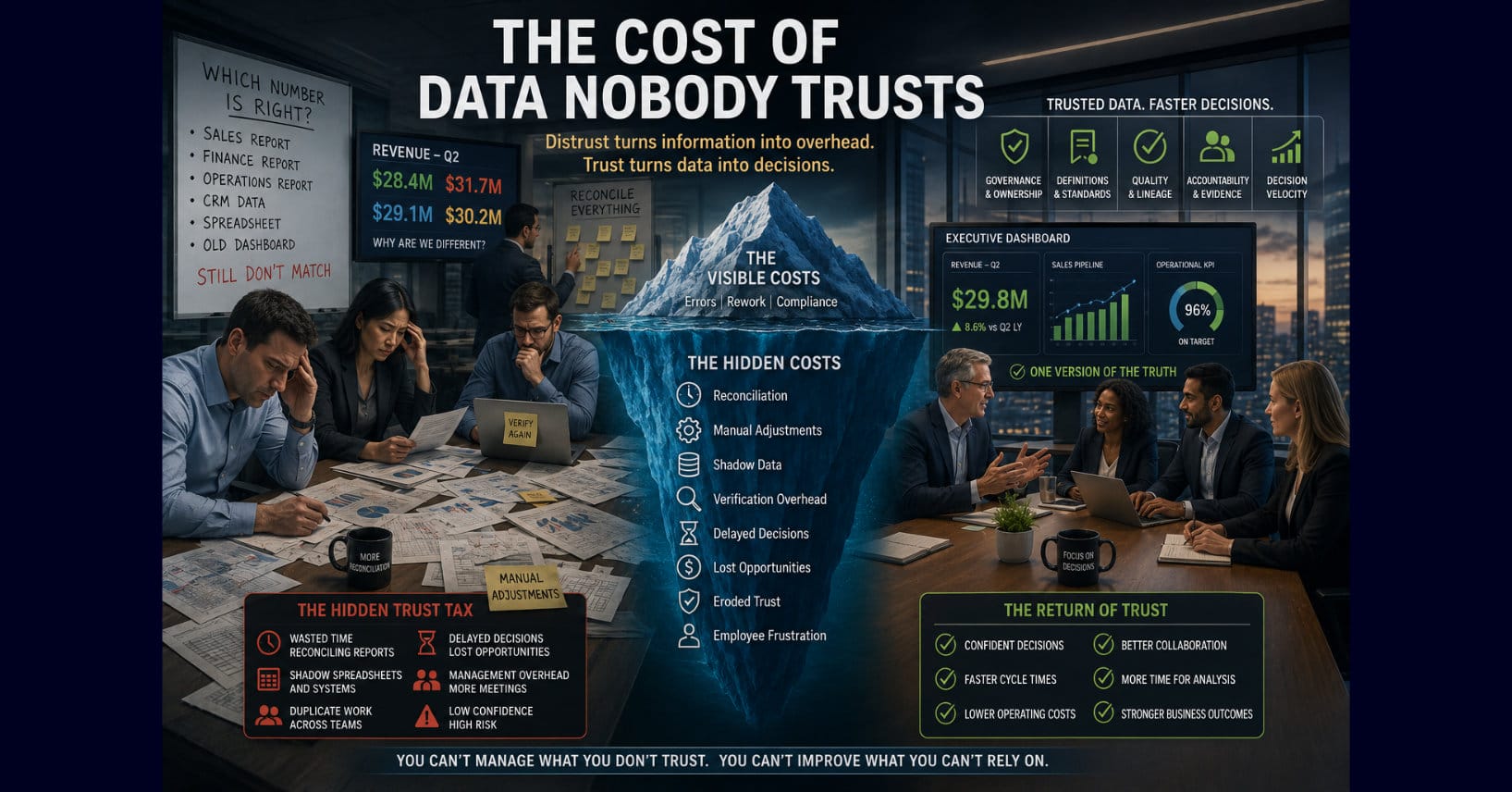
The Cost of Data Nobody Trusts
Data distrust creates a hidden enterprise tax through reconciliation, shadow systems, manual verification, duplicated analysis, management overhead, delayed decisions, and lost opportunities.
-
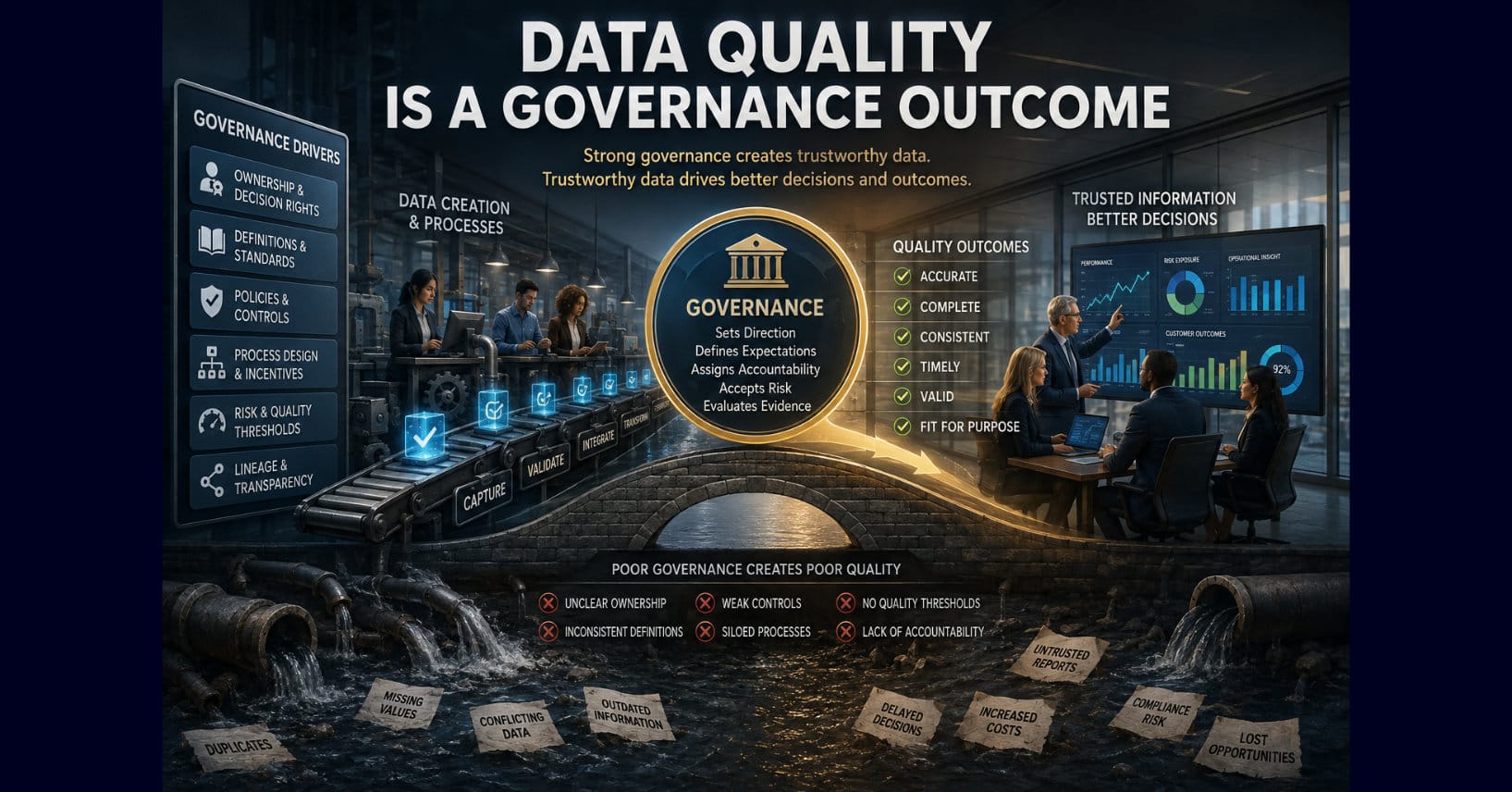
Data Quality Is a Governance Outcome
Persistent data-quality problems often begin upstream. Strong governance connects ownership, definitions, controls, processes, thresholds, and accountability to produce trustworthy data.
-
Artificial Intelligence, Cybersecurity, Data Governance, Enterprise Governance, Information Architecture
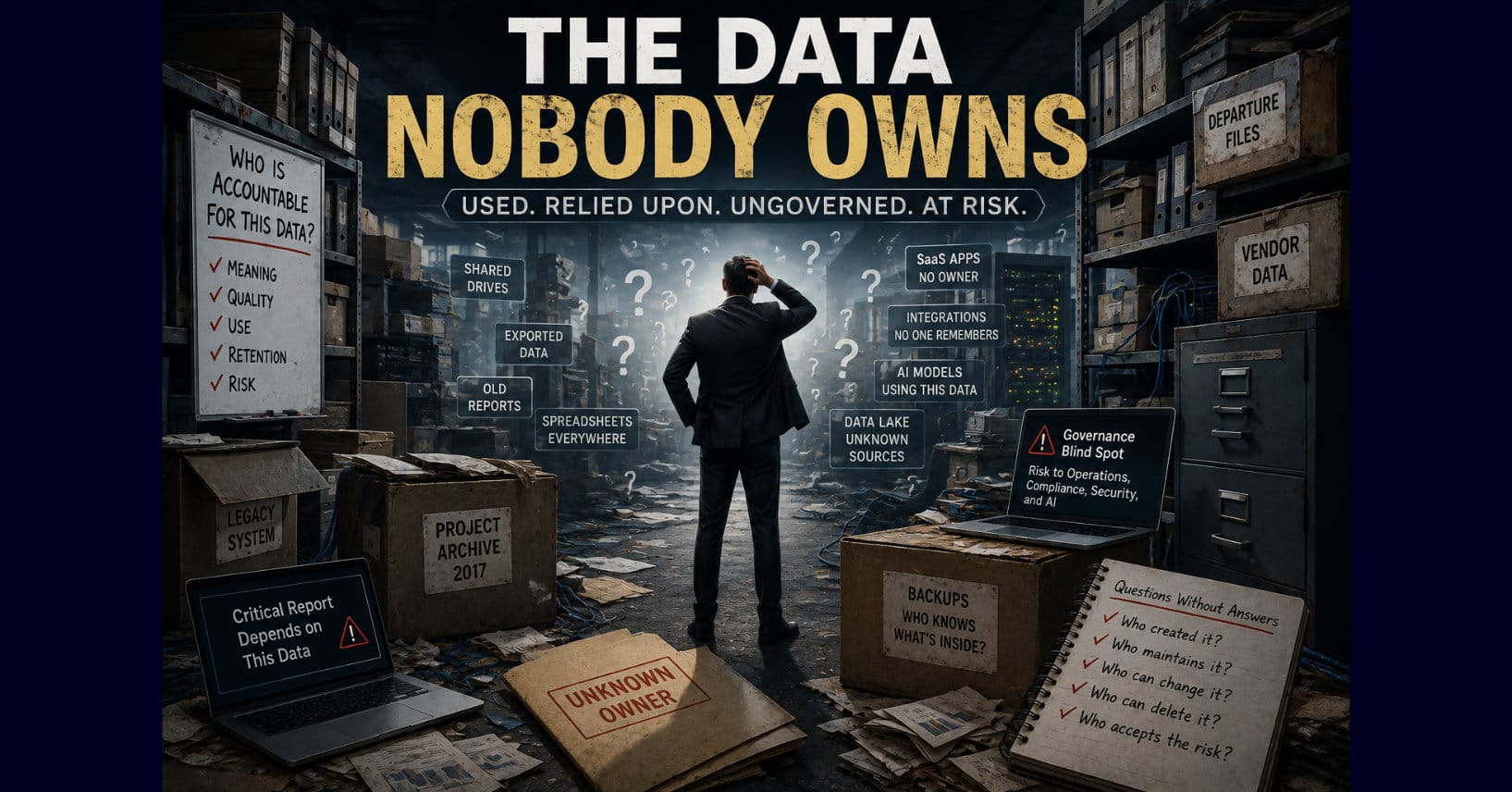
The Data Nobody Owns
Some enterprise data remains actively used long after its ownership and governance disappear. Orphaned data creates hidden operational, security, regulatory, and AI risks.
-
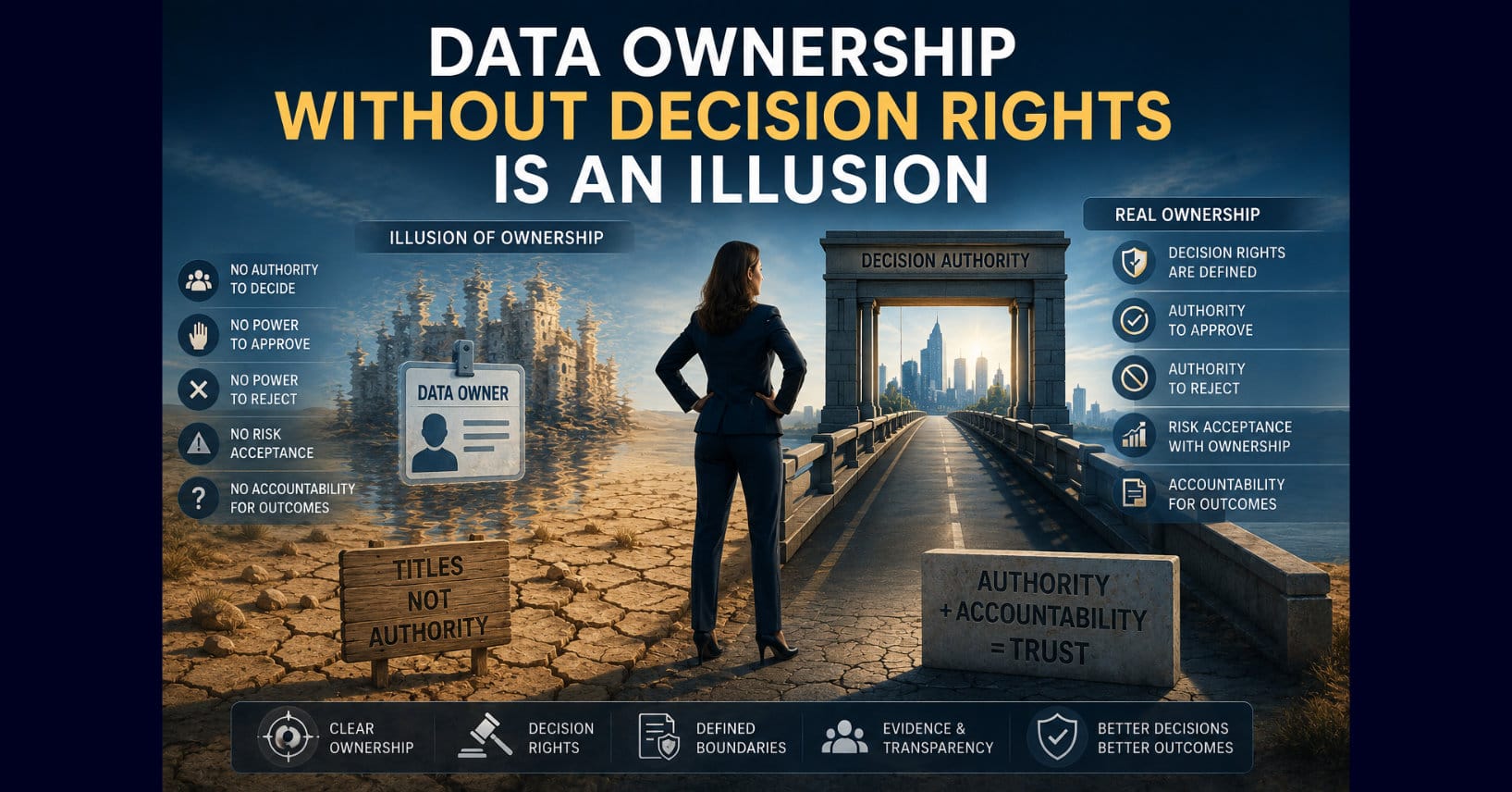
Data Ownership Without Decision Rights Is an Illusion
Assigning a data owner does not create accountability if that person cannot make meaningful decisions. Real ownership requires authority, defined boundaries, risk acceptance, and evidence.