Category: Software Architecture
-

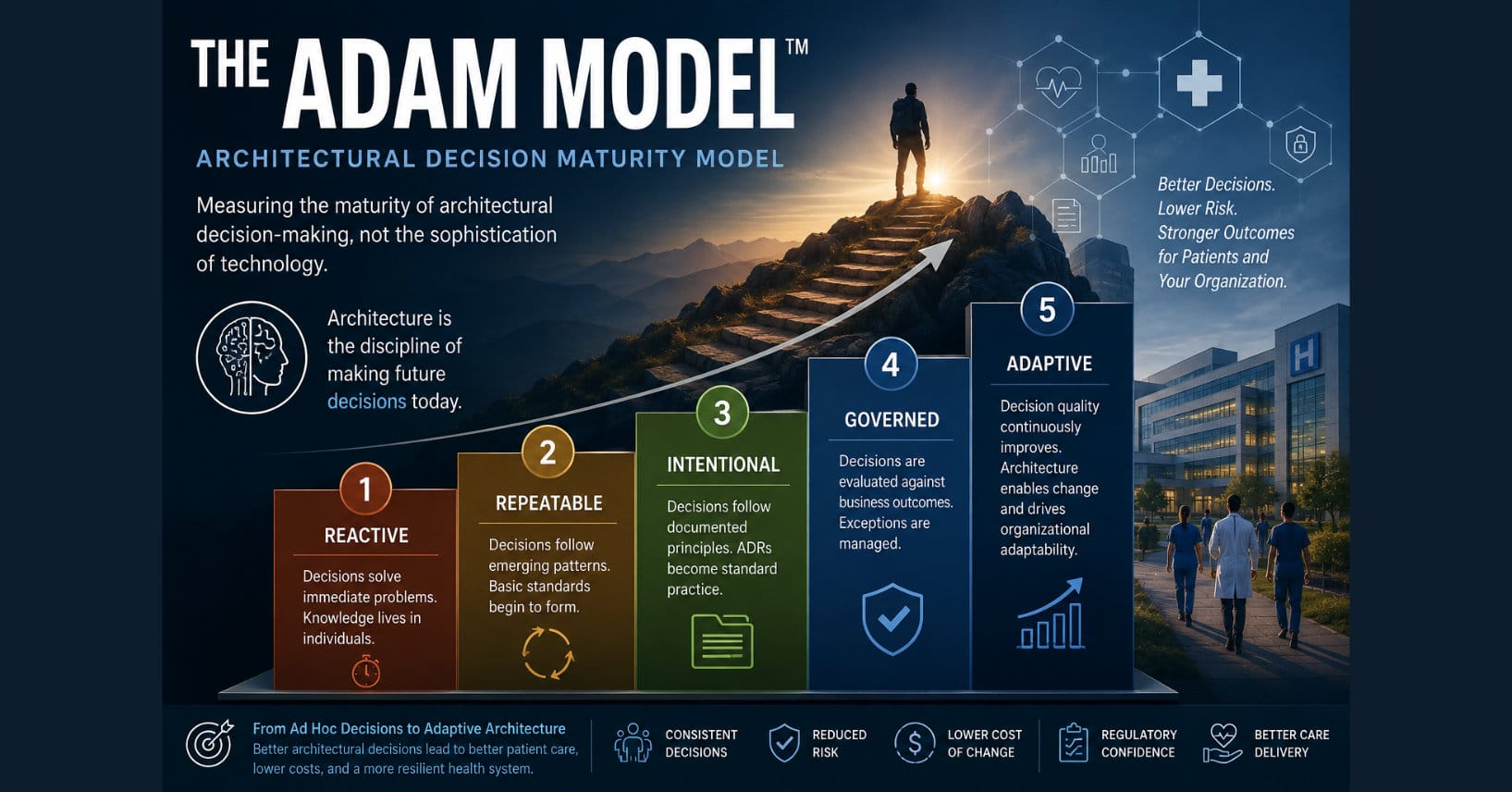
Introducing the ADAM Model™
Introducing the ADAM Model™—the Architectural Decision Maturity Model. Discover a new framework for measuring the maturity of architectural decision-making rather than technology adoption.
-
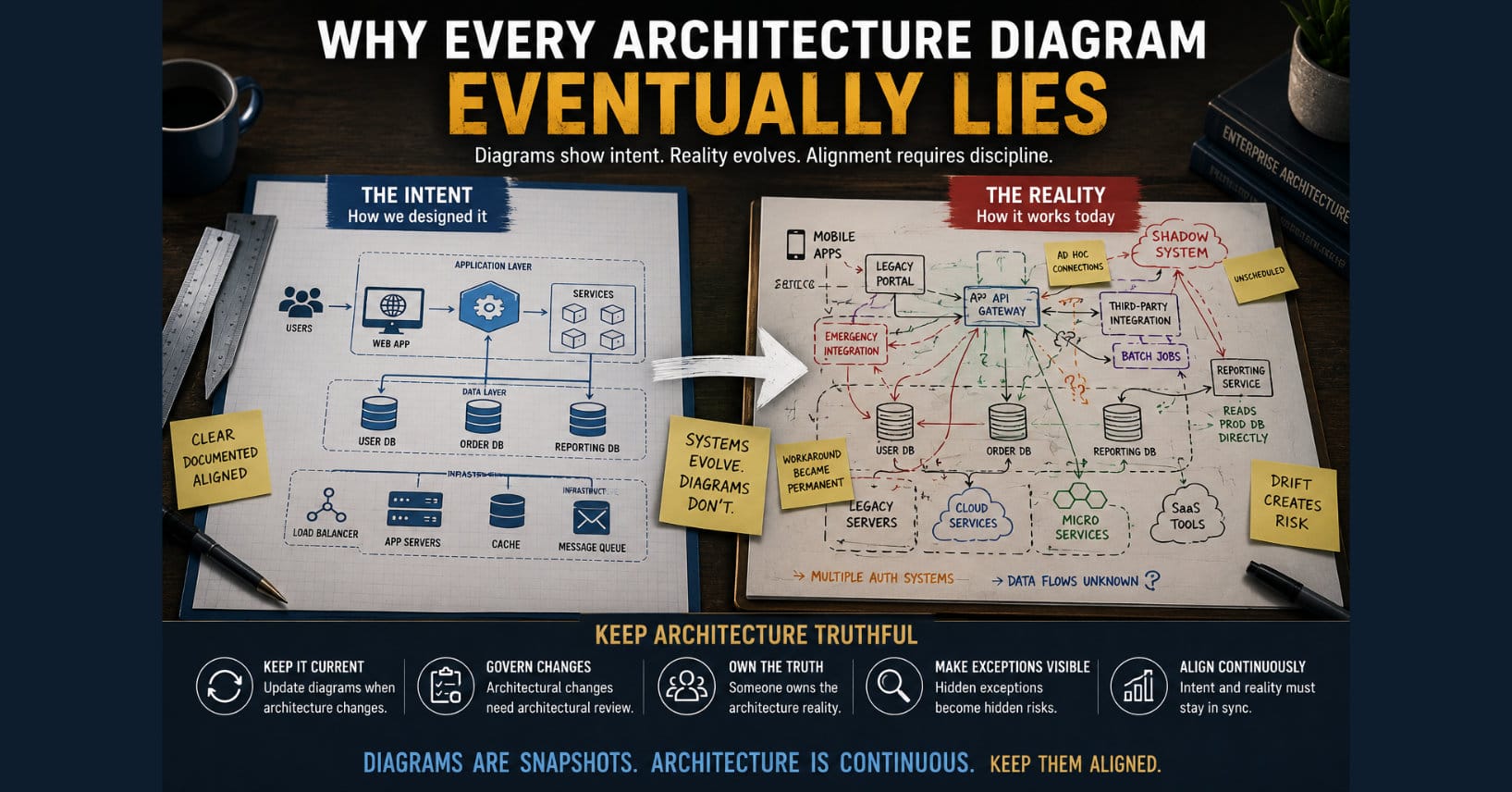
Why Every Architecture Diagram Eventually Lies
Architecture diagrams capture a moment in time. Without continuous governance, they drift away from production reality, creating risk instead of clarity.
-
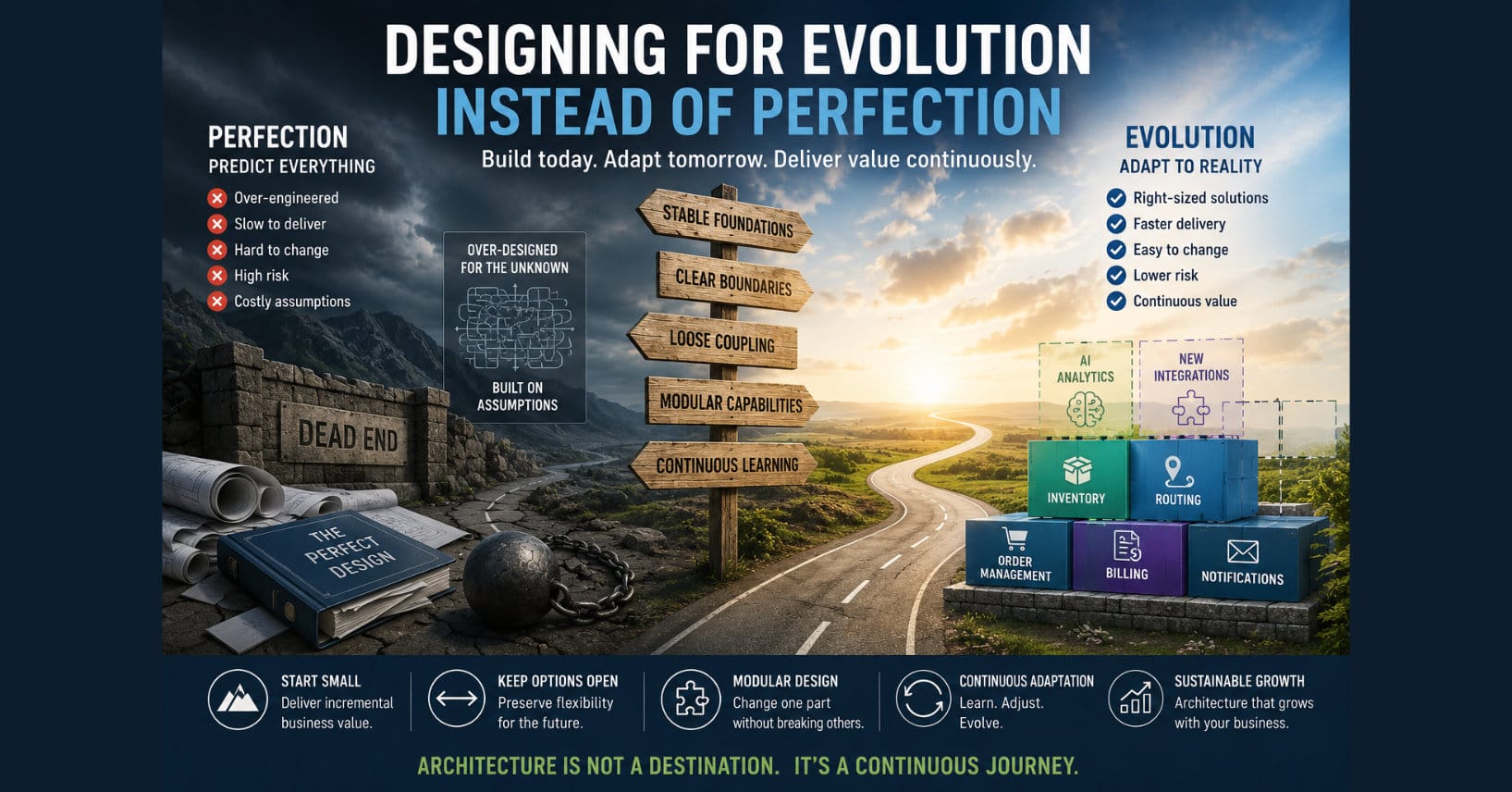
Designing for Evolution Instead of Perfection
The best enterprise architectures are not perfect—they are adaptable. Learn why designing for evolution creates systems that respond to change without costly redesigns.
-
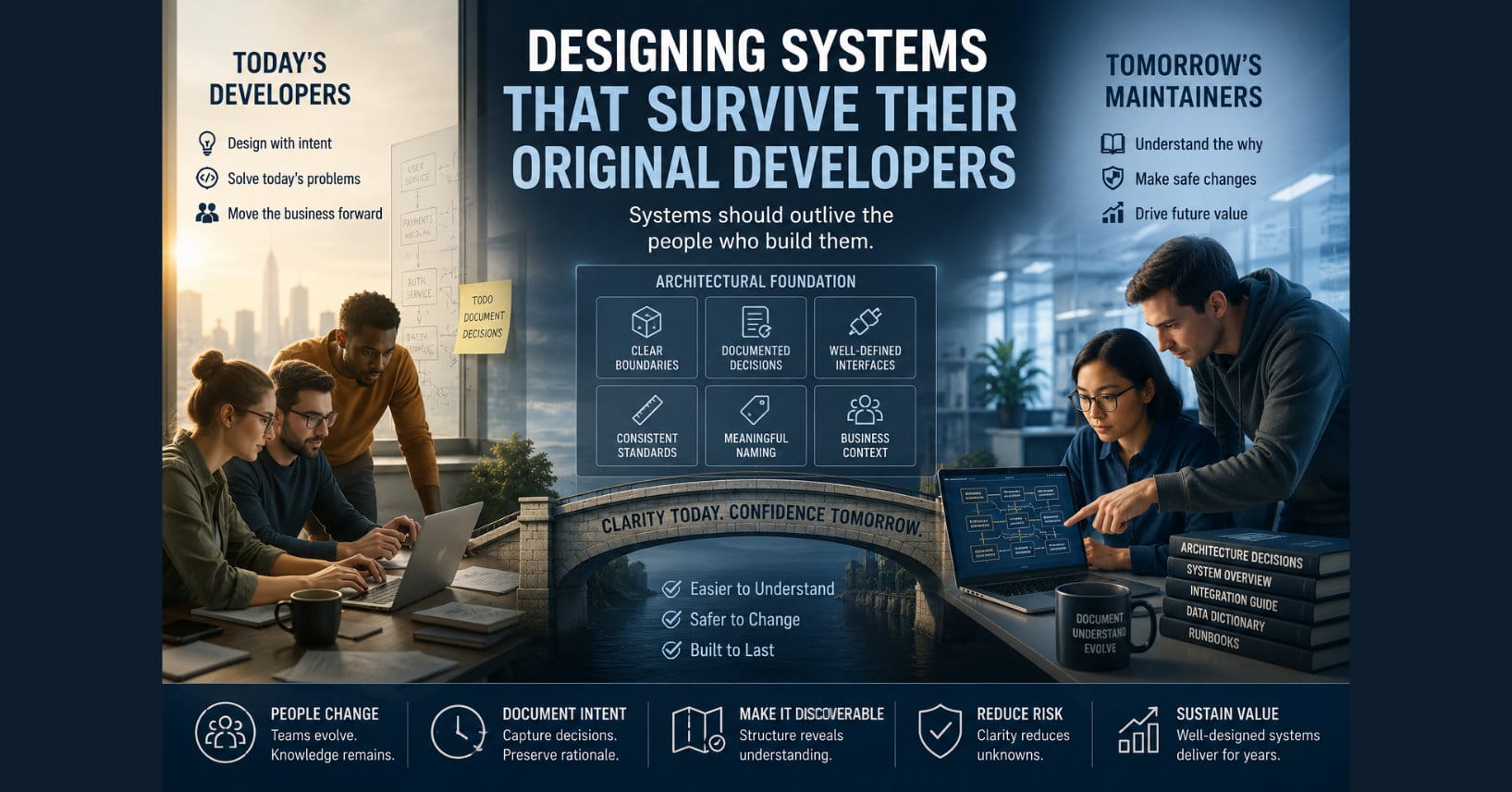
Designing Systems That Survive Their Original Developers
Enterprise systems should outlive the people who build them. Learn how clear architecture, documentation, and intentional design preserve knowledge for future teams.
-
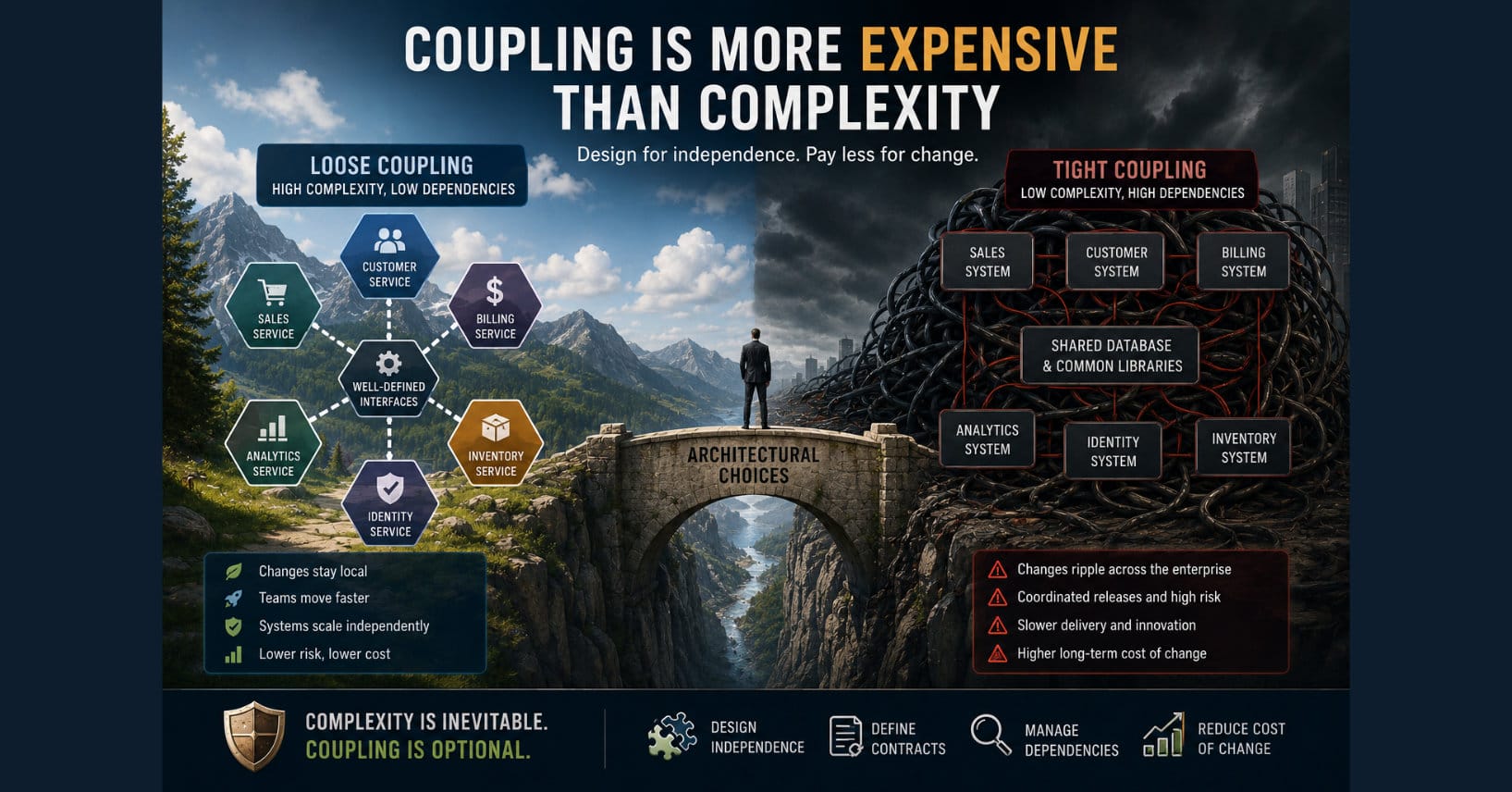
Coupling Is More Expensive Than Complexity
Complex systems are not necessarily expensive to maintain. Tightly coupled systems are. Learn why reducing dependencies is one of the most valuable goals of enterprise architecture.
-
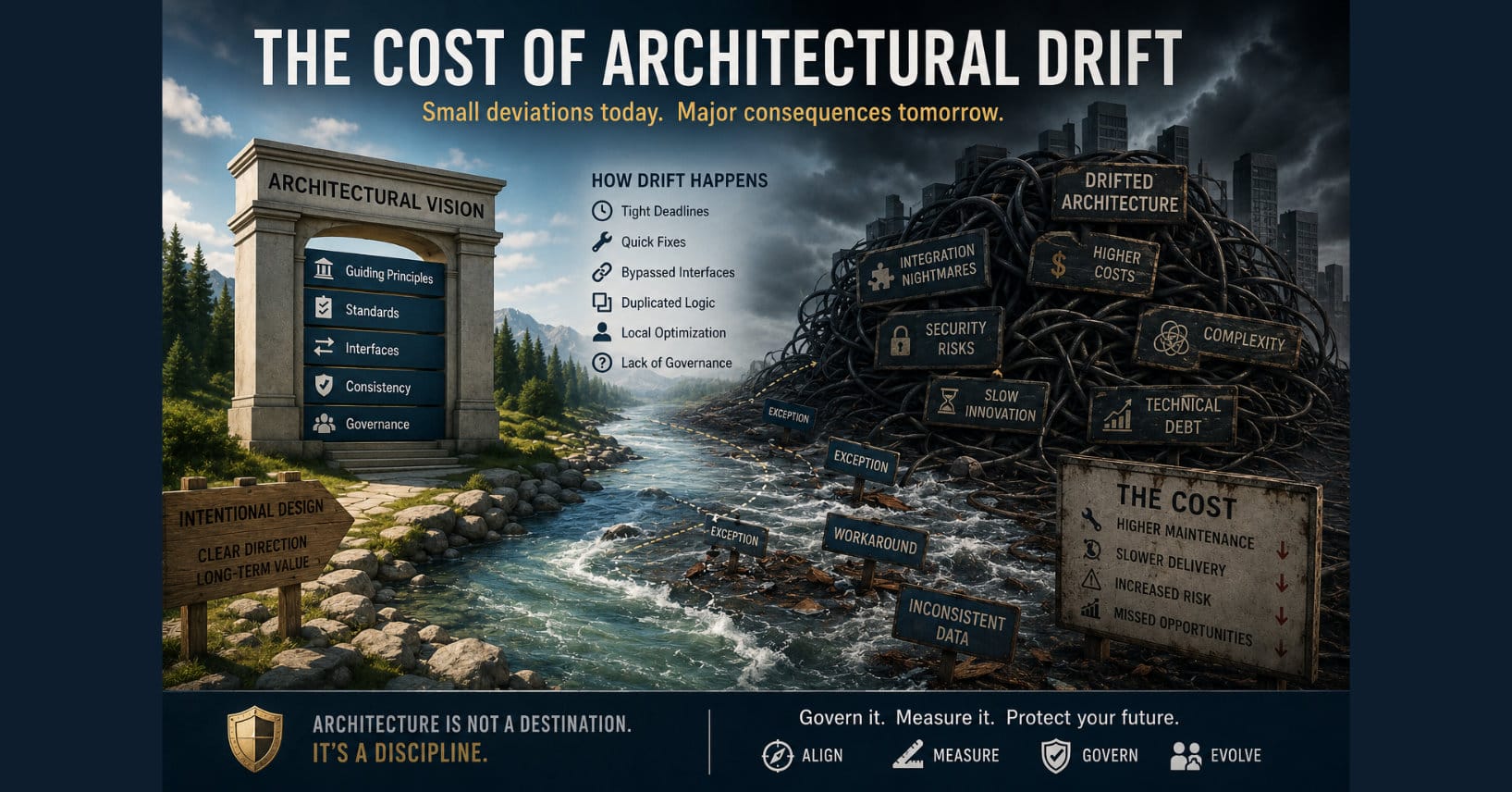
The Cost of Architectural Drift
Architectural drift rarely happens all at once. It begins with small exceptions that gradually erode system integrity, increasing costs, complexity, and business risk over time.