Yes, âpwnedâ is spelled correctly. According to the Urban Dictionary, the word âpwnedâ is:
A corruption of the word âOwned.â This originated in an online game called Warcraft, where a map designer misspelled âowned.â When the computer beat a player, it was supposed to say, so-and-so âhas been owned.â Instead, it said, so-and-so âhas been pwnedâ.
Rivera, Daniel. Urban Dictionary. Retrieved August 3, 2018
Has your email account or password ever been compromised? Do you even know?
You have personal computers, smart phones, social network accounts, and family members with the same, maybe even more than you. All of these devices and accounts are up for grabs if you donât protect yourself and your loved ones. You are probably at greater risk of having your personal systems compromised than your companyâs. You are vulnerable. Your account may have already been compromised. In today's parlance, having your account compromised is called getting pwned. Why donât you check to see if youâve been pwned?
You can check whether youâve been pwned and have an account that has been compromised in a data breach at https://haveibeenpwned.com/. At the time of this writing, Have I Been Pwned has details on 297 pwned websites, 5,369,804,192 pwned accounts, 75,653 pastes, and 82,644,754 paste accounts.
Let's explain pastes. According to the Have I Been Pwned FAQs:
Often when online services are compromised, the first signs of it appear on âpasteâ sites like Pastebin. Attackers frequently publish either samples or complete dumps of compromised data on these services.
A word to the wiseâwhen you check if you have pwned accounts, try not to have anyone looking over your shoulder unless you are absolutely certain you wonât be embarrassed by the search results. The website displays a list of every breach where your email has been compromised.
 This year seems to be the prime time for must-have updates. First came the MacBook Pro 2018. Now, It's
 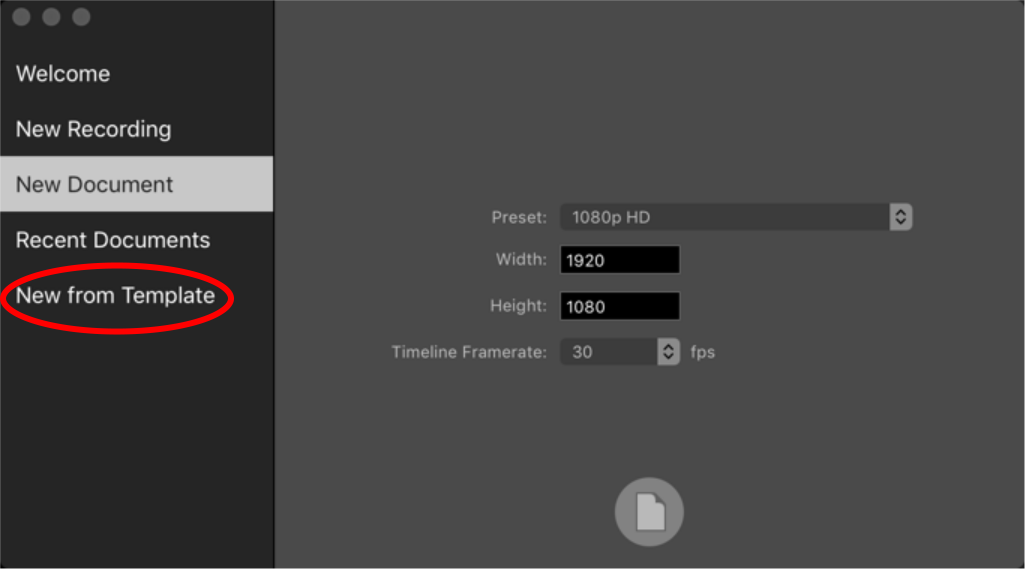 ScreenFlow 8 supports creating new projects from templates. If you do a lot of similarly styled videos like a tutorial series, video course, etc., you can prebuild your projects with just a few placeholders and all of your content immediately gets dropped into that project when you're done recording. ScreenFlow's new template feature will save you ton's of time!
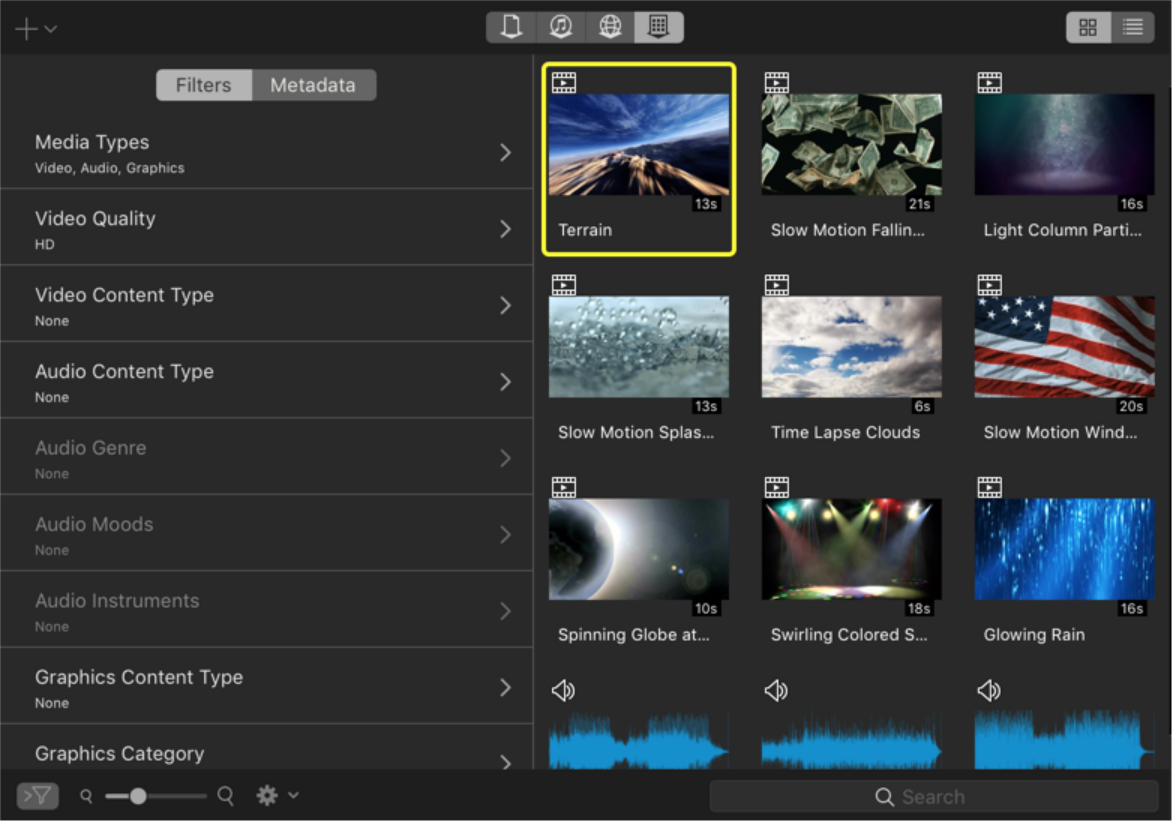 One of my favorite new features is the incorporation of a stock media library. Yes, that's right! We now have access to a stock media library built right into the ScreenFlow 8 interface. No more searching the web for stock videos, audio, images, transitions, and chroma key support.

 If you've been around the internet for any length of time, you may remember Web 1.0. This was the beginning of the phenomenon known as the World Wide Web that brought us file and web servers, and websites built using static pages connected by hyperlinks. As Web 1.0 evolved, we added animated GIFs and had tools available to us like Microsoft FrontPage and Macromedia Dreamweaver to help us develop our sites more easily.
 But truth be told, predicting how Web 3.0 will eventually evolve is like playing the lottery. It's a complete guessing game because there is no clear definition of what it means. If we distill what we know about the historical evolution of Web 1.0 and Web 2.0, we can extrapolate that Web 3.0 is the next fundamental change both in how websites are created and more importantly, how people interact with them.